
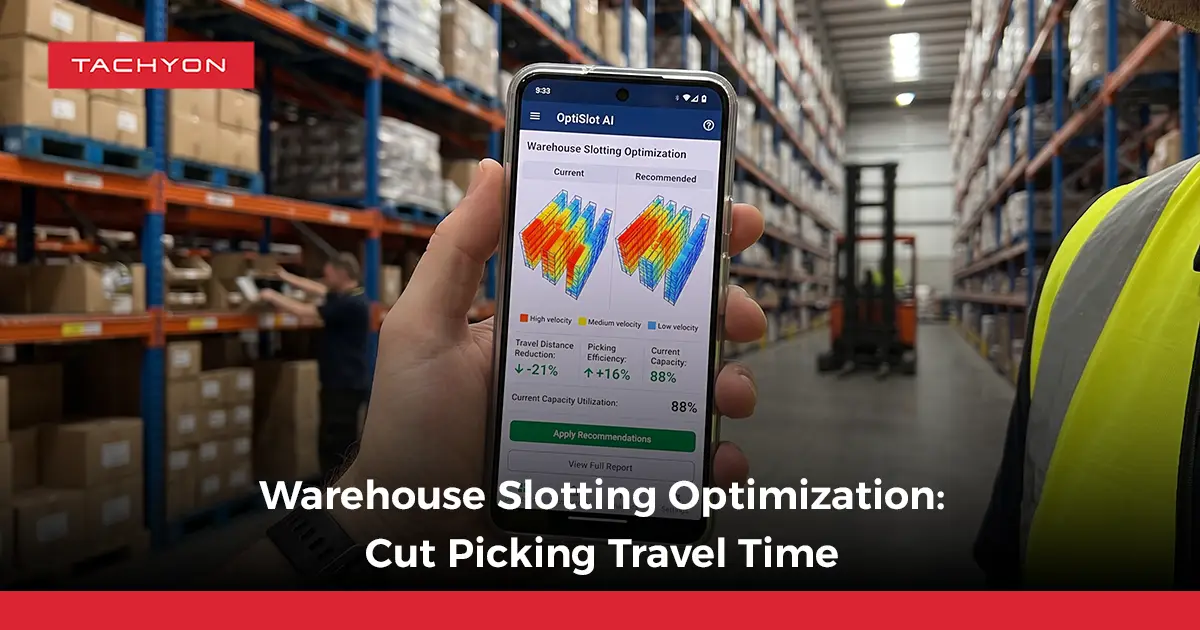
In modern warehouse and supply chain management, operational efficiency
is heavily dictated by how quickly and accurately orders can be picked.
Warehouse slotting the strategic placement of inventory within a facility
serves as the foundation for streamlining these workflows. By intentionally
organizing where items are stored based on their physical characteristics
and demand patterns, distribution centers can dramatically cut down
unnecessary movement and accelerate throughput.
What Is Warehouse Slotting?
Warehouse slotting is the process of determining the most logical and
efficient storage location for every item in an inventory based on its
unique characteristics, dimensions, weight, and frequency of demand.
-
Determining Storage Locations:
Instead of storing items randomly or purely based on product categories,
strategic slotting assigns fixed or floating locations to SKUs to
minimize handling friction. -
Data-Driven Placement:
The practice shifts warehouses away from chaotic or random storage
models toward structured strategies informed by actual operational
data and order history. -
Balancing Variables:
Proper slotting evaluates how often an item is ordered, how heavy or
bulky it is, and whether it requires specialized storage conditions.
Why Is Warehouse Slotting Important?
Implementing a well-designed slotting strategy delivers profound
operational and financial benefits across the warehouse floor:
-
Minimizing Travel Distances:
Storing high-demand items closer to shipping and packing zones
drastically reduces the physical distance workers must travel. -
Accelerating Order Picking:
Streamlined pathways and logical item placement allow pickers
to gather items faster. -
Optimizing Space Utilization:
Making efficient use of vertical and horizontal storage prevents
wasted capacity. -
Reducing Warehouse Congestion:
Smooth traffic flow prevents bottlenecks in high-activity aisles. -
Raising Fulfillment Efficiency:
Higher picks-per-hour metrics directly translate to greater
overall throughput. -
Lowering Picking Errors:
Clear organization and logical placement reduce worker confusion,
resulting in higher picking accuracy.
What Is Slotting Optimization?
Slotting optimization is the ongoing, data-driven
process of evaluating, refining, and rearranging warehouse inventory
placements to ensure maximum operational efficiency as demand
patterns evolve.
-
Beyond Basic Arrangement:
Unlike initial static slotting, optimization is a dynamic,
continuous process that adapts to changing inventory mixes
and seasonal peaks. -
Core Data Inputs:
Optimization relies heavily on analyzing a robust set of
operational metrics:-
Product Velocity:
How fast a product moves in and out of the warehouse. -
Size and Weight:
Physical dimensions that dictate handling requirements. -
Order Frequency:
How often a SKU appears on customer order sheets. -
Pick Counts:
The total number of times an item is physically retrieved. -
Seasonality:
Demand surges tied to specific times of the year. -
Item Affinity (Association):
Identifying products that are frequently purchased and
ordered together.
-
Product Velocity:
How Does Warehouse Slotting Reduce Picking Travel Time?
Because minimizing travel time is the core objective of an efficient
warehouse, strategic slotting attacks movement inefficiency through
several targeted tactics:
1. Place Fast-Moving Products Closer to Pick Paths
Positioning high-velocity items right at the front of the warehouse
or closest to primary staging and packing zones cuts transit times
instantly, as pickers spend less time walking to deep storage racks
for everyday items.
2. Group Frequently Ordered Products
When items frequently purchased together are slotted adjacent to
one another, pickers can complete multi-item orders in a single,
localized sweep without zigzagging across the facility.
3. Position Products Based on Size and Weight
Placing heavy or bulky items at ergonomic heights and closer to dock
doors prevents slow handling, reduces equipment strain, and protects
fragile goods from mishandling.
4. Reduce Unnecessary Walking and Backtracking
Eliminating random storage layouts ensures that warehouse staff
move in clean, forward-flowing paths rather than walking back and
forth to retrieve overlooked items.
5. Create Efficient Picking Zones
Dividing the warehouse into zones based on pick frequency allows
staff to stay within dedicated areas for high-volume orders,
cutting down aisle crossing times.
Warehouse Layout Design and Slotting
Warehouse layout design and
warehouse slotting work hand in hand to define the
physical movement of people and inventory. While layout establishes
the macro-infrastructure—such as aisle widths, dock locations,
and racking configurations—slotting determines the micro-placement
of inventory within that framework.
-
Aisle and Zone Interaction:
The layout must support smooth traffic flows, preventing narrow
bottlenecks where pickers collide or get stuck behind
replenishment equipment. -
Zoning by Velocity:
High-speed zones should be placed near staging areas, while
slow-moving inventory is relegated to upper or rear racks. -
Maintaining Flexibility:
A strong layout incorporates flexible racking that can adapt
easily when slotting adjustments are required.
Warehouse Design Principles for Efficient Picking
-
Optimize Aisle Width and Accessibility:
Ensure aisles are wide enough for safe passage and easy retrieval
without risking inventory damage. -
Position High-Demand SKUs Strategically:
Keep fast-moving items at waist-height (golden zone) to minimize
bending and reaching. -
Separate Picking and Replenishment Activities:
Prevent stockers from blocking pickers by scheduling replenishment
during off-peak hours or using dedicated flow-through paths. -
Design Clear Product Flow:
Direct inventory from receiving to storage to packing in a
unified, unidirectional flow. -
Allow Space for Future Inventory Changes:
Design storage systems with expansion in mind to accommodate
new product lines without disrupting existing slotting layouts.
Pick Path Optimization: How to Improve Picking Routes
Pick path optimization focuses on calculating the
most efficient physical route a worker takes to collect all items
on a given pick list.
-
Minimizing Point-to-Point Distance:
Advanced routing algorithms guide pickers through the shortest
possible path rather than leaving navigation to guesswork. -
Synergy with Slotting:
While pick path optimization determines the
route, warehouse slotting optimization
ensures the right items are placed along that optimal route. -
WMS Integration:
Modern Warehouse Management Systems analyze order data to
generate sequential pick paths dynamically, cutting travel
time per order significantly.
How to Implement a Warehouse Slotting Strategy
-
Analyze Your SKU Data:
Pull historical reports to evaluate order frequencies, pick
volumes, and transaction histories. -
Classify Products by Velocity:
Segment your inventory into fast-moving (A), medium-moving (B),
and slow-moving (C) categories. -
Evaluate Product Characteristics:
Document dimensions, weight, fragility, and special storage
constraints for each SKU. -
Map Your Current Warehouse Layout:
Audit existing rack spaces, zones, and travel bottlenecks. -
Assign Optimal Storage Locations:
Relocate inventory based on velocity and affinity groupings. -
Test the New Slotting Strategy:
Run a pilot phase in a specific zone to measure initial improvements. -
Monitor and Adjust Regularly:
Continuously track performance metrics and update slotting
maps dynamically.
Warehouse Slotting Methods and Strategies
-
ABC Slotting:
Categorizes inventory into A, B, and C based on Pareto principles
(frequency or revenue value) to prioritize prime real estate. -
Velocity-Based Slotting:
Focuses strictly on movement turnover rates, placing high-turn
items closest to dispatch zones. -
Family Grouping (Product Affinity):
Groups items that are frequently bought together into the same
storage neighborhood. -
Size and Weight-Based Slotting:
Prioritizes ergonomics and safety by keeping heavy items
accessible and low to the ground. -
Seasonal Slotting:
Temporarily adjusts storage locations ahead of peak seasons
or promotional events to handle high-demand spikes smoothly.
How Technology Supports Slotting Optimization
Managing complex inventory layouts and high-velocity fulfillment
operations requires sophisticated technological infrastructure.
Modern software tools eliminate guesswork by turning raw operational
data into actionable putaway and storage strategies:
-
Warehouse Management Systems (WMS):
Acting as the operational core of the facility, advanced WMS
platforms track real-time inventory movements, manage putaway
rules, and intelligently suggest optimal storage slots based
on historical pick data. -
Advanced Data Analytics:
Deep-dive analytics tools uncover hidden correlations in customer
order data, identifying subtle seasonal buying habits and
purchasing trends that might otherwise go unnoticed. -
Demand Forecasting:
Predictive engines anticipate future inventory velocity before
demand surges occur, allowing warehouse managers to proactively
readjust slotting maps ahead of peak shopping periods. -
Automated Re-evaluation and Triggering:
Modern software platforms continuously monitor item movement
and automatically flag when a SKU’s velocity shifts, triggering
immediate recommendations to re-slot the item into a more
efficient zone.
Common Warehouse Slotting Mistakes
Even experienced logistics teams can fall into operational traps
that undermine throughput and slow down picking workflows.
Avoiding these frequent missteps is crucial for maintaining
an efficient facility:
-
Stash High-Demand Items in Remote Zones:
Placing fast-moving SKUs in deep storage, high racks, or the rear
of the warehouse forces pickers to waste valuable time walking
long distances. -
Maintaining a Static Storage Layout:
Relying on a fixed layout despite shifting consumer buying trends
and fluctuating product popularity leads to heavy bottlenecks. -
Ignoring Weight and Dimensions:
Neglecting item ergonomics by placing heavy or bulky goods in
awkward or high-tier slots causes physical strain on workers
and significantly slows down retrieval speeds. -
Failing to Group Complementary Items:
Overlooking product affinity—items frequently purchased and
ordered together—forces staff to zigzag across different zones
to fulfill a single order. -
Designing Convoluted Pick Paths:
Creating inefficient routing layouts that force pickers into
backtracking or crossing paths unnecessarily. -
Neglecting Periodic Inventory Reviews:
Failing to audit and update inventory distribution regularly
as business lines grow and seasonal demands change. -
Prioritizing Space Over Access:
Focusing exclusively on achieving 100% space utilization at
the expense of ease of access, ergonomic safety, and fast
picking speeds.
How to Measure Warehouse Slotting Performance
To evaluate the success of your slotting strategy, track these
essential key performance indicators (KPIs):
-
Picking Travel Time:
Total time workers spend walking between picks. -
Average Pick Time:
Time required to complete an individual order line or batch. -
Travel Distance per Order:
Total physical footage covered per fulfilled order. -
Picks per Hour:
Measure of picker productivity. -
Picking Accuracy:
Percentage of error-free orders fulfilled. -
Order Fulfillment Time:
End-to-end time from order placement to packing completion. -
Space Utilization:
Ratio of used storage capacity to total available warehouse space.
When Should You Re-Slot Your Warehouse?
- Shifts in customer purchasing patterns or seasonal trends.
- Introduction of major new product lines or categories.
- Changes in top-selling items.
- Spikes in promotional activity or peak shopping seasons.
- Noticeable increases in overall order fulfillment times.
- Rising worker fatigue or extended travel distances during picking.
- Modifications to physical warehouse layout or storage capacities.
Warehouse Slotting Optimization Checklist
- ☐ Analyze inventory movement data
- ☐ Identify fast-moving SKUs (Velocity classification)
- ☐ Review warehouse layout design and traffic flow
- ☐ Evaluate and refine picking paths
- ☐ Assess product dimensions, weight, and fragility
- ☐ Group complementary products that sell together
- ☐ Measure and track picking travel times
- ☐ Review slotting optimization results periodically
Frequently Asked Questions About Warehouse Slotting
1. What is warehouse slotting?
Warehouse slotting is the practice of organizing and assigning
specific storage locations to inventory items based on their
physical attributes, handling needs, and demand frequency.
2. What is slotting optimization?
It is the continuous, data-driven process of analyzing inventory
movement and rearranging storage assignments to minimize travel
distance and maximize picking efficiency.
3. How does warehouse slotting reduce picking time?
By placing high-velocity and frequently ordered items closer
to dispatch areas and shipping docks, workers walk significantly
shorter distances to complete each pick.
4. What is the best slotting strategy for a warehouse?
The ideal strategy depends on your specific inventory mix;
many operations use a hybrid model combining ABC analysis,
velocity tracking, and family grouping.
5. How often should warehouse slotting be reviewed?
Slotting should be audited at least quarterly, though high-volume
or seasonal e-commerce operations may benefit from monthly
or continuous dynamic reviews.
6. What is the difference between warehouse slotting and warehouse layout design?
Layout design establishes the physical architecture (racks, aisles,
docks), while slotting determines exactly which products are
placed within those structures.
7. How does a WMS support warehouse slotting?
A WMS tracks item velocity, analyzes order history, automates
putaway rules, and generates actionable slotting recommendations
to keep operations streamlined.
Optimize Your Warehouse Slotting Strategy
Transforming your warehouse operations starts with eliminating
wasted movement and maximizing picking efficiency. Evaluating
your facility layout, refining item placement, and leveraging
smart slotting strategies will significantly cut down travel times
and accelerate your order fulfillment cycles. By integrating a
powerful
digital logistics platform
,
you gain end-to-end visibility and control over your entire
warehouse ecosystem.
Ready to elevate your warehouse performance? Contact our supply
chain experts today to assess your operations, upgrade your storage
layouts, and unlock peak productivity across your fulfillment floor.
