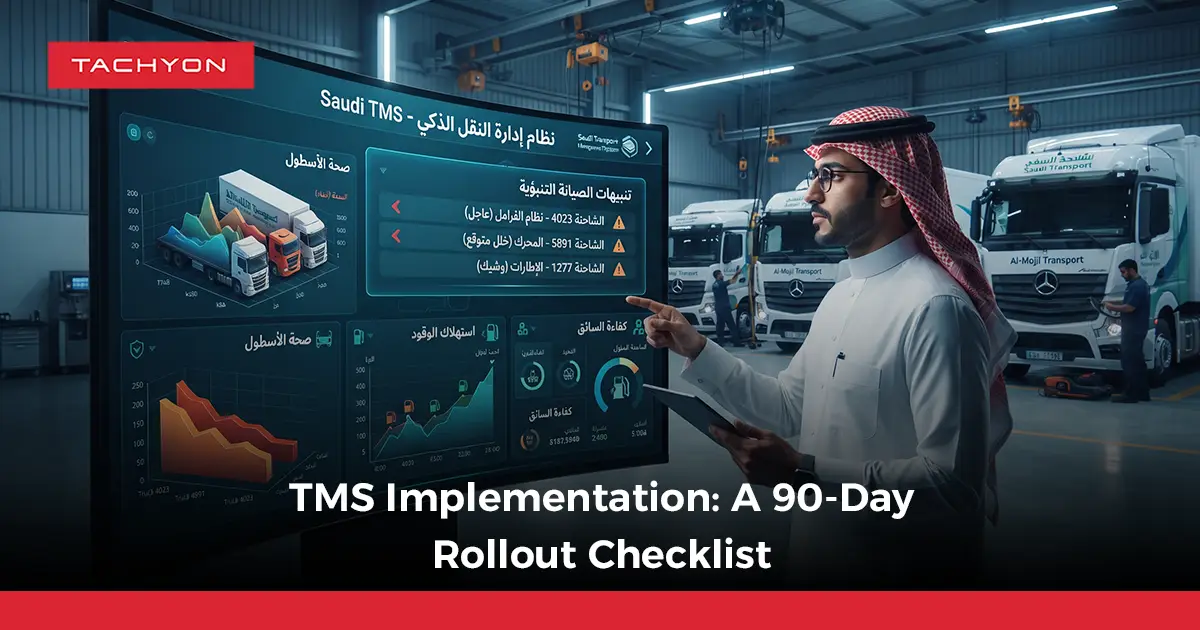
A successful TMS implementation is not simply installing transportation software. It is a structured process of redesigning transport workflows, preparing logistics data, connecting business systems, onboarding users and carriers, testing real operating scenarios, and moving transportation activities into a controlled digital environment.The objective is to make the new system part of daily logistics operations without disrupting shipments, customer commitments, or financial processes. A strong implementation therefore combines technology, data, process design, and people management from the beginning.
What Is TMS Implementation?
TMS implementation is the process of configuring and deploying a Transportation Management System across an organization so it can plan, execute, monitor, and analyze transportation operations.The implementation extends beyond software configuration because transportation data, carriers, users, workflows, and connected systems must operate together before the platform can replace existing manual or legacy processes.The implementation usually covers four core areas:
1. Business Process Transformation
A successful implementation starts by defining how transportation operations should work before and after deployment:
Current-State Review: Logistics teams document how shipments are currently created, planned, assigned, tracked, invoiced, and reported.
Future-State Design: Processes are redesigned around the new TMS capabilities instead of recreating every spreadsheet, approval step, or legacy workaround.
Business Alignment: The project is connected to measurable goals such as lower freight costs, stronger visibility, better load utilization, or higher on-time delivery.
2. Technical Implementation
The technical foundation connects transportation workflows with the company’s wider digital ecosystem:
System Configuration: Transportation rules, shipment types, locations, carriers, rates, routes, users, and operational parameters are configured.
System Integration: The TMS connects with ERP, warehouse, order, finance, telematics, and other required business systems.
Data Migration: Existing master data and operational records are cleaned, standardized, validated, and transferred before production use.
3. Operational Adoption
Technology must become part of everyday logistics operations to deliver its expected value:
User Onboarding: Planners, dispatchers, operations teams, finance staff, managers, and other users receive training based on their responsibilities.
Carrier Participation: External transportation partners are connected through APIs, EDI, portals, mobile applications, or other supported channels.
New Ways of Working: Teams understand which legacy processes are being replaced and how operational exceptions will be managed after go-live.
4. Implementation Timeline
A realistic timeline should reflect the actual complexity of the transportation environment:
Scope Dependency: Implementation duration depends on the number of sites, carriers, integrations, users, workflows, and project resources.
Deployment Complexity: A limited single-site rollout can move faster than a multi-country or multi-system implementation.
TMS Rollout Plan: The timeline should be built around project dependencies instead of relying on one fixed implementation period.
What Should Be Ready Before TMS Implementation Starts?
Many implementation problems begin before system configuration starts. Poor process documentation, inaccurate master data, unclear ownership, and incomplete integration requirements can create delays later in the project.Before starting the rollout, logistics teams should prepare the following areas:
1. Clear Business Objectives
The project should start with measurable business outcomes rather than general digital transformation goals:
Operational Goals: Define the transportation problems the implementation should solve, including manual dispatching, limited visibility, high freight costs, or inefficient carrier management.
Success Metrics: Establish KPIs such as on-time delivery, freight cost per shipment, truck utilization, tender acceptance, or planning productivity.
Executive Alignment: Senior stakeholders should agree on project priorities, resources, and expected business outcomes.
2. Cross-Functional Project Ownership
TMS implementation affects more than the transportation department, so ownership should be distributed across relevant functions:
Core Team: Include representatives from logistics, IT, finance, procurement, customer service, and other departments affected by transportation workflows.
Decision Ownership: Assign a project owner who can resolve scope, configuration, and process decisions without unnecessary delays.
Super Users: Select experienced operational users who can validate workflows, participate in testing, and support teams during rollout.
3. Clean Transportation Data
Reliable transportation planning depends on accurate and standardized master data:
Master Data: Validate customers, locations, carriers, vehicles, routes, rates, service levels, and other operational records.
Data Standards: Remove duplicates and inconsistent addresses, names, codes, or transportation classifications.
Data Governance: Define who owns critical logistics data after go-live to maintain data quality over time.
4. Integration Requirements
The TMS should operate as part of the wider supply-chain technology environment:
System Mapping: Document which applications must send information to or receive information from the TMS.
Data Flows: Define how orders, inventory, shipments, tracking events, carriers, invoices, and other records move between platforms.
Technical Method: Determine whether integrations will use APIs, EDI, native connectors, file exchange, or other methods.
A transport management system should connect transportation planning and execution with the wider logistics ecosystem instead of operating as an isolated platform.
TMS Implementation Roadmap: From Design to Go-Live
A structured TMS rollout plan reduces implementation risk by separating discovery, integration, configuration, testing, deployment, and optimization into controlled stages.Here is a practical implementation roadmap:
TMS Rollout Phase
Main Activities
Expected Output
Discovery & Scope
Processes, requirements, KPIs, governance
Approved implementation scope
Data & Integration Design
Master data, integrations, data mapping
Validated technical design
Configuration & Build
Rules, workflows, users, carriers, rates
Configured test environment
Testing & Onboarding
UAT, exceptions, carrier and user onboarding
Production-ready solution
Go-Live & Hypercare
Cutover, monitoring, issue resolution
Stable production operation
Optimization
KPI reviews, workflow improvements, expansion
Continuous business value
1. Discovery & Solution Design
The first stage establishes how transportation operations should work inside the new system:
Process Mapping: Document workflows from order creation through planning, execution, tracking, delivery, and freight settlement.
Requirement Prioritization: Separate essential operational requirements from optional customizations that may add unnecessary complexity.
Future-State Design: Agree on how transportation operations should function after implementation before configuration starts.
2. Data Preparation & System Integration
Once the future process is defined, the technical and data foundation can be prepared:
Master Data Validation: Clean carriers, customers, locations, lanes, rates, and transportation records before migration.
Warehouse Integration: Connecting a warehouse management system keeps warehouse execution synchronized with transportation planning.
Order Integration: An order management system can send order information to transportation planning and receive shipment and fulfillment updates.
3. Configuration & Workflow Build
Configuration converts the future-state transportation design into operational system rules:
Transport Rules: Configure shipment creation, load building, route planning, carrier selection, tendering, dispatch, tracking, and settlement.
User Permissions: Define role-based access for planners, operations teams, managers, finance users, and administrators.
Exception Logic: Build workflows for delays, rejected tenders, missed pickups, failed deliveries, rate exceptions, and other disruptions.
4. Testing & TMS Onboarding
Testing should confirm that the platform works across both normal and exception scenarios:
User Acceptance Testing: Test complete transportation scenarios using realistic shipment volumes, routes, carriers, and delivery windows.
Integration Testing: Confirm that information moves accurately between the TMS and every connected platform.
Carrier Onboarding: Ensure carriers can receive tenders, update statuses, submit documentation, and complete required workflows.
5. Go-Live & Hypercare
The go-live stage moves transportation operations from legacy processes into the new platform:
Cutover Plan: Define exactly when live transportation activity moves into the TMS and which final data must be migrated.
Phased Rollout: Deployment can be staged by site, region, transportation mode, business unit, or another manageable scope.
Hypercare Support: Create a defined post-launch period with clear issue ownership, escalation paths, and rapid problem resolution.
6. Post-Launch Optimization
Go-live should begin the optimization stage rather than end the implementation project:
Performance Reviews: Compare actual system performance against the KPIs defined at the beginning of the project.
User Feedback: Collect structured input from planners, dispatchers, managers, carriers, and other users.
Continuous Improvement: Refine workflows, automation rules, dashboards, integrations, and planning logic as operational requirements change.
TMS Onboarding and Change Management for Logistics Teams
A technically successful rollout can still fail to create business value if users continue working through spreadsheets, calls, emails, or previous systems.Effective change management logistics programs should therefore address the following areas:
1. Communicate the Operational Change
Users are more likely to adopt the TMS when they understand why processes are changing:
Explain the Why: Show teams which transportation problems the new platform is designed to remove.
Define New Processes: Clearly document which spreadsheets, approvals, communication methods, or legacy tools will be replaced.
Set Expectations: Explain responsibilities before go-live so users know what they must enter, monitor, approve, or escalate.
2. Train Users by Role
Training should reflect how each user group interacts with transportation operations:
Planners & Dispatchers: Focus on shipment creation, planning, carrier assignment, route decisions, tracking, and exceptions.
Managers: Focus on dashboards, KPIs, alerts, reporting, and transportation performance analysis.
3. Build Internal TMS Champions
Internal expertise makes adoption easier after implementation support begins to decrease:
Super Users: Develop advanced users who understand both transportation workflows and platform functionality.
Local Support: Give operational teams an accessible first point of contact before every issue becomes an IT ticket.
Feedback Channel: Allow super users to collect concerns and convert them into structured improvement requests.
4. Onboard External Partners
Carrier adoption is essential to maintaining a connected transportation workflow:
Carrier Connectivity: Determine whether carriers will connect through API, EDI, portal, mobile application, or another supported channel.
Workflow Compliance: Confirm carriers understand tendering, status updates, proof of delivery, documentation, and exception processes.
Adoption Monitoring: Track participation to avoid recreating fragmented communication outside the TMS.
How to Measure TMS Implementation Success After Go-Live
Implementation success should be measured against the original business case, not simply by confirming that the system is technically available.The following KPI groups provide a practical view of post-launch performance:
1. Transportation Cost Performance
Transportation economics should show whether the system is improving freight efficiency:
Freight Cost: Measure transportation cost per shipment, order, lane, customer, unit, or other relevant business measure.
Load Utilization: Track whether better planning and consolidation are increasing vehicle or trailer utilization.
Exception Cost: Monitor detention, accessorial charges, spot freight, failed deliveries, and other avoidable expenses.
2. Service & Delivery Performance
Service metrics indicate whether digital transportation planning is improving reliability:
On-Time Delivery: Monitor delivery performance against customer and operational commitments.
Transit Reliability: Compare planned and actual transit performance across carriers, lanes, and transportation modes.
3. Operational Productivity
Automation should reduce repetitive transportation work and increase planning capacity:
Planning Efficiency: Measure how many shipments or loads planners can manage after implementation.
Manual Work Reduction: Track reductions in spreadsheets, duplicate entry, emails, calls, and manual status updates.
Exception Resolution: Monitor how quickly teams detect and resolve delays or transportation disruptions.
4. Data & Analytics Adoption
Better decision-making should become part of everyday transportation management:
Dashboard Usage: Verify that managers are using live transportation dashboards rather than manually prepared reports.
KPI Visibility:logistics analytics software can consolidate transport KPIs and operational information for ongoing analysis.
Continuous Optimization: Historical data can reveal recurring delays, expensive lanes, weak carrier performance, and inefficient planning rules.
Build a Scalable TMS Rollout with Tachyon
A successful TMS implementation connects technology, transportation data, users, carriers, processes, and business systems into one operating model.TachyonTMS supports connected transportation operations through the following capabilities:
Centralized Transportation Operations: Manage shipment planning, execution, tracking, carrier activity, and transportation visibility from one platform.
Connected Logistics Ecosystem: Integrate transportation workflows with warehouse, order, analytics, and other enterprise systems.
Real-Time Operational Visibility: Monitor shipments, trips, locations, and transport performance during execution.
Scalable Digital Workflows: Expand transportation processes as shipment volumes, sites, carriers, and logistics requirements grow.
A successful rollout is not complete when the software goes live. It is complete when the new transportation process becomes the normal way the organization plans, executes, monitors, and improves logistics operations.Discover TachyonTMS and request a demo to build a connected transportation operation with stronger visibility, automation, and data-driven control.
Frequently Asked Questions About TMS Implementation
What is TMS software used for?
A Transportation Management System is used to plan, execute, track, and optimize the movement of goods. It can support shipment planning, routing, carrier management, load optimization, transportation visibility, documentation, and freight analysis.
How long does TMS implementation take?
There is no universal implementation period because the timeline depends on project scope, integrations, number of sites, carriers, data quality, business processes, and available implementation resources.
What is a TMS rollout plan?
A TMS rollout plan defines the stages required to move from project discovery to production use. It normally covers requirements, data preparation, integrations, configuration, testing, onboarding, training, go-live, and optimization.
What is TMS onboarding?
TMS onboarding is the process of preparing employees and external transportation partners to work within the new system. It includes account setup, training, carrier connectivity, workflow validation, documentation, and operational support.
What is TMS vs WMS?
A TMS manages transportation activities such as shipment planning, carriers, routing, tracking, and freight execution. A WMS manages warehouse operations such as receiving, inventory, put-away, picking, packing, and outbound preparation.
Is a TMS an ERP system?
No. A TMS is a specialized transportation platform, while an ERP manages broader enterprise processes such as finance, procurement, sales, and other business functions. The two systems commonly integrate to exchange operational and financial information.
What does TMS stand for in SAP?
In SAP supply-chain applications, TMS generally refers to Transportation Management, which supports transport planning, execution, freight-unit management, and transportation settlement.
What are the biggest risks in TMS implementation?
Common risks include poor-quality data, excessive customization, unclear requirements, weak integration design, insufficient project ownership, limited testing, inadequate user training, and resistance to new workflows.