
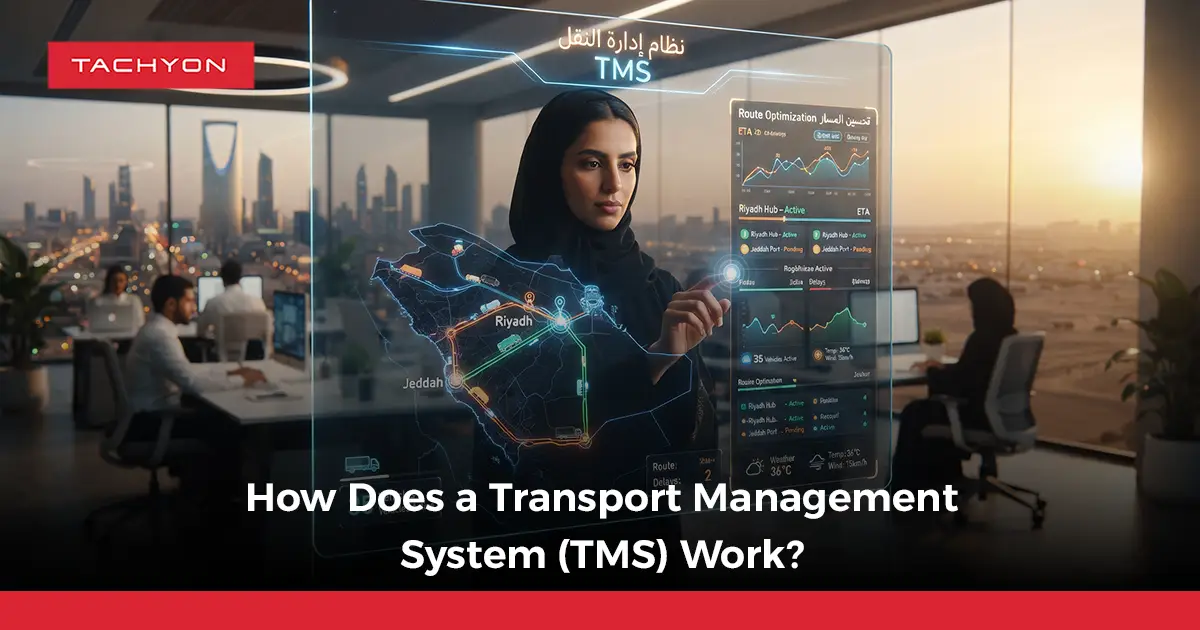
How does transport management system work? A TMS receives transportation demand, converts it into executable shipment plans, assigns suitable transport resources, monitors execution, and uses the resulting data to improve future transport decisions.
The important point is that a TMS is not simply a shipment-tracking screen. Modern transportation management systems support transportation planning and execution and can connect with ERP, order, warehouse, fleet, carrier, and analytics environments.
IBM describes TMS as a logistics tool for managing inbound and outbound shipping, while SAP Transportation Management supports planning, execution, and freight settlement.
Key Takeaways
- A TMS starts with transportation demand: Orders, transfers, returns, or shipment requests provide the information needed to create transport work.
- Planning happens before dispatch: The system evaluates locations, shipment requirements, capacity, timing, and available transport resources before execution.
- TMS decisions depend on connected data: Order, vehicle, location, customer, carrier, and shipment data affect how transportation is planned.
- Execution needs continuous status information: Dispatch, driver activity, shipment milestones, and delivery events should update the transport record.
- TMS is different from fleet management: TMS manages transportation movements, while fleet management focuses more deeply on vehicles, drivers, maintenance, and operating costs.
- Analytics completes the cycle: Completed transport operations generate data that can improve costs, service levels, utilization, and future planning.
What Does a TMS Actually Manage?
A TMS manages the movement of goods between locations rather than simply storing information about an order or vehicle.
| TMS Area | What It Controls |
|---|---|
| Transport Demand | Identifies what needs to move, from where, to where, and by when. |
| Shipment Planning | Organizes transport requirements into executable shipments or trips. |
| Resource Allocation | Matches work with suitable carriers, vehicles, or transport resources. |
| Dispatch | Releases planned transport work for execution. |
| Shipment Visibility | Monitors current shipment and trip status. |
| Transport Documentation | Organizes documents associated with transportation workflows. |
| Exception Management | Identifies delays, failed milestones, or other operational problems. |
| Cost Management | Supports transport charges, billing, settlement, or related financial workflows where included. |
| Reporting | Measures transport performance after execution. |
SAP’s current Transportation Management documentation separates capabilities into areas including master data, logistics integration, freight-order management, planning, charge calculation, settlement, and execution.
Oracle similarly describes the core role of a TMS as planning, executing, and optimizing the physical movement of goods.
How Does a TMS Turn Business Demand Into Transport Work?
1. Transportation Demand Enters the System
A transport process normally begins because something needs to move. That demand may originate from a customer order, purchase order, stock transfer, return, ERP transaction, or another logistics system.
When an order management system is connected with the transportation environment, information such as delivery location, quantity, service requirement, order priority, and requested delivery time can be passed into transport planning instead of being recreated manually.
SAP documents transportation demand being generated from sales orders, purchase orders, stock transport orders, and customer returns, which demonstrates why transport planning frequently starts upstream of the TMS itself.
2. The TMS Builds a Transport Requirement
The system translates the incoming business demand into transportation information that can be planned operationally.
Relevant information can include:
- Pickup Location: Where the goods will start their journey.
- Delivery Location: Where the shipment must arrive.
- Shipment Size: Weight, volume, pallets, cartons, or other capacity requirements.
- Required Date: When pickup or delivery should take place.
- Service Priority: Whether the movement is routine, urgent, scheduled, or subject to specific service commitments.
- Special Requirements: Vehicle type, loading constraints, product conditions, or handling requirements.
- Customer or Contract Rules: Requirements associated with the shipper, consignee, or transport agreement.
What Happens During TMS Planning?
1. Shipments Are Grouped or Separated
Several transport requirements may be combined into one trip when location, timing, and vehicle capacity make consolidation practical. Other shipments may need to remain separate because of delivery windows, product requirements, or operational constraints.
2. Capacity Requirements Are Evaluated
The TMS must determine whether the available vehicle or transport resource can handle the planned work without exceeding operational constraints.
3. Transport Resources Are Selected
Depending on the operating model, transportation may be assigned to an internal vehicle, an external carrier, a contracted fleet, or another transport resource.
Oracle identifies mode and carrier selection based on factors such as cost, efficiency, and distance as important TMS planning functions.
4. Trips Are Scheduled
The transport plan needs expected pickup, departure, arrival, and delivery timing so operations teams can coordinate resources and detect later deviations.
5. The Plan Becomes Executable Work
Once planning is approved, the transport requirement becomes an operational trip, shipment, freight order, or similar executable transport record depending on the system being used.
What Information Does a TMS Need Before Dispatch?
| Data | Why the TMS Needs It |
|---|---|
| Origin and Destination | Determines where transportation begins and ends. |
| Shipment Quantity | Helps calculate capacity requirements. |
| Vehicle Requirements | Identifies suitable transport resources. |
| Pickup Window | Determines when the movement can begin. |
| Delivery Window | Supports scheduling and service commitments. |
| Available Vehicles or Carriers | Determines which transport resources can perform the work. |
| Driver Information | Supports assignment and execution where an internal fleet is used. |
| Route Information | Supports trip planning and expected movement. |
| Rates or Transport Costs | Supports cost comparison and transport financial workflows. |
| Operational Constraints | Prevents unsuitable transport plans from being executed. |
A TMS therefore depends heavily on master and operational data. SAP specifically identifies locations, business partners, service products, and commodity information among the master data required for transportation planning.
What Happens When the Transport Plan Is Dispatched?
1. A Vehicle or Carrier Receives the Assignment
The planned shipment is assigned to the selected transport resource. For internal fleets this may mean a particular truck and driver; for outsourced transport it may involve a carrier.
2. The Driver Receives Operational Information
Where a driver application is connected, the driver can receive trip information, locations, shipment requirements, and operational instructions digitally.
3. Transport Documents Become Available
Required shipment and operational documents can be associated with the trip rather than being managed through unrelated files or communication channels.
4. Shipment Milestones Begin Updating
The TMS can start recording operational events such as assignment, arrival, loading, departure, transit, arrival at destination, unloading, or completion depending on the configured workflow.
Tachyon’s existing TMS documentation includes trip creation, shipment history, live tracking, interactive maps, driver applications, digital documents, and shipment milestone monitoring.
How Does a TMS Know What Is Happening During Transport?
1. Driver Updates
A mobile application can allow drivers to update transportation events directly during execution.
2. GPS or Telematics Data
Connected positioning systems can provide vehicle-location information without depending entirely on manual driver reporting.
3. System Integrations
Updates may originate from other logistics systems, carriers, ERP platforms, external services, or operational integrations.
4. Shipment Milestones
Each completed operational event can update the trip record, making it easier to determine whether execution is progressing according to plan.
5. Exception Alerts
If actual transport activity no longer matches expected timing or status, the system can expose the problem for operational action.
IBM highlights real-time shipment visibility and automation as important roles of modern TMS solutions, while Tachyon documents driver-app and GPS integration for tracking shipment locations and trip status.
How Does Fleet Management Fit Into the TMS Workflow?
1. TMS Determines the Transport Requirement
The TMS needs to know what must move, where it must go, and the operational conditions under which transportation should happen.
2. Fleet Management Provides Vehicle Context
A fleet management system handles more detailed information about the physical fleet, such as vehicles, drivers, maintenance schedules, fuel usage, tires, operating costs, and availability.
3. Both Systems Support Resource Decisions
The TMS can use fleet information when deciding whether a particular vehicle or driver is appropriate and available for a transportation assignment.
4. Execution Data Can Return to Both Systems
Trip distance and vehicle use are relevant to transportation performance, but they can also affect maintenance, utilization, and fleet-cost analysis.
Tachyon separates these responsibilities across Tachyon TMS and Tachyon FMS: the TMS manages transportation operations, while FMS focuses on vehicles, drivers, maintenance, fuel, tires, and fleet expenses.
TMS vs FMS vs OMS vs WMS
| System | Main Question It Answers |
|---|---|
| TMS | How should these goods be transported? |
| FMS | How should our vehicles and drivers be managed? |
| OMS | What orders need to be processed and fulfilled? |
| WMS | How should inventory and warehouse activities be managed? |
The systems overlap operationally but solve different problems. IBM notes that TMS solutions can integrate with ERP, supply-chain, and warehouse environments, while Tachyon provides separate TMS, FMS, OMS, and WMS products within the same broader logistics platform.
How Does the TMS Connect With Warehouse Operations?
1. Pickup Readiness Matters to Transportation
A truck arriving before goods are ready can create waiting time. Transport planning therefore benefits from knowing when shipments will actually be available.
2. Vehicle Arrival Affects Warehouse Work
Warehouses may need to coordinate staging, loading doors, labor, and loading activities with expected transport schedules.
3. Shipment Details Must Remain Consistent
The transport system and warehouse environment need to refer to the same goods, quantities, locations, and transport requirements.
4. Transport Execution Updates the Wider Logistics Process
Once loading is completed and the shipment departs, transportation becomes responsible for the next stage of the physical movement.
IBM describes WMS connectivity as relevant because warehouse teams need visibility into inbound and outbound transportation schedules to manage capacity more effectively.
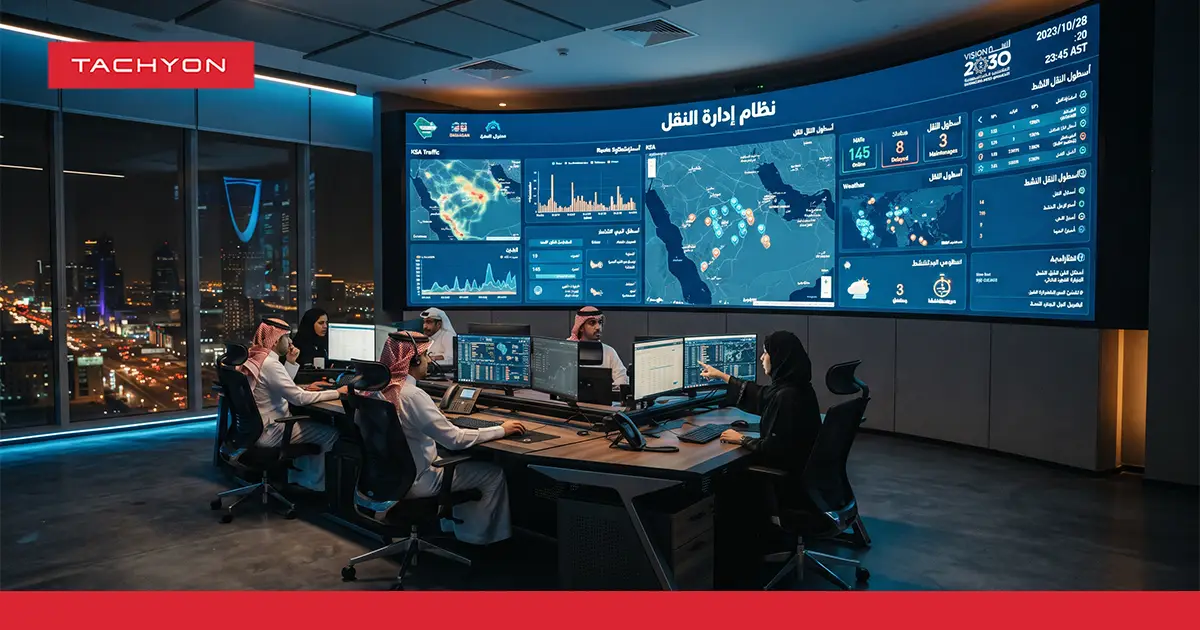
What Is TMS Architecture?
TMS architecture describes how the transportation management layer exchanges information with the systems and users around it.
| Architecture Layer | Typical Responsibility |
|---|---|
| Business Systems | ERP, orders, procurement, sales, or customer information. |
| Fulfillment Systems | Warehouse and inventory operations. |
| TMS Core | Transportation planning, dispatch, execution, tracking, and transport control. |
| Fleet and Carrier Layer | Internal vehicles, drivers, carriers, and transport capacity. |
| Driver and Tracking Layer | Driver applications, GPS, status updates, and location information. |
| Integration Layer | APIs and system connectors used to exchange operational data. |
| Analytics Layer | KPIs, reports, cost analysis, and performance monitoring. |
A modern TMS is therefore better understood as an orchestration layer than as an isolated application. IBM describes TMS solutions as systems that can plug into ERP or SCM environments, while Tachyon’s current platform architecture is built around interconnected logistics modules and API integration.
Which TMS Modules Are Usually Needed?
- Shipment Management: Creates and maintains transport records.
- Transport Planning: Converts demand into executable transport plans.
- Dispatch: Assigns and releases transportation work.
- Carrier Management: Coordinates external transport providers where applicable.
- Vehicle and Driver Assignment: Associates transport work with execution resources.
- Tracking: Monitors shipment and trip progress.
- Document Management: Organizes transport-related documentation.
- User Management: Controls user roles and access.
- Cost and Billing: Supports transport charges, invoicing, or settlement where included.
- Exception Management: Highlights delays and other deviations.
- Reporting: Measures cost, service, utilization, and transport performance.
Not every TMS contains exactly the same TMS modules. SAP, Oracle, IBM, and Tachyon expose different product structures, so businesses should evaluate modules according to their actual transportation model rather than assuming one universal configuration.
What Happens When a Shipment Does Not Follow the Plan?
1. The Expected and Actual Status Diverge
A vehicle may leave late, loading may take longer than planned, a driver may stop unexpectedly, or a delivery may miss its expected window.
2. The TMS Identifies the Exception
The system should expose relevant deviations so operations teams do not need to manually inspect every active shipment.
3. Operations Decide the Response
Possible actions may include contacting the driver, changing the schedule, reassigning resources, updating stakeholders, or replanning later transport work.
4. The Event Becomes Performance Data
Once the trip is complete, the delay should remain visible in historical data so managers can determine whether it was isolated or part of a recurring pattern.
This distinction is important because transport visibility is useful only when it helps teams identify what needs attention rather than merely displaying all active shipments.
How Does TMS Data Improve Future Transport Decisions?
1. Compare Planned and Actual Delivery Performance
Managers can determine whether estimated transport times match actual execution.
2. Measure Transport Costs
Cost information can be compared across customers, routes, vehicles, carriers, or service types where the required financial data is available.
3. Analyze Carrier Performance
Businesses using external transport providers can compare service reliability, delays, and other agreed performance measures.
4. Identify Recurring Delays
Historical information can reveal locations, customers, routes, or operating periods associated with repeated transportation problems.
5. Improve Capacity Planning
Utilization and shipment-volume trends can support future decisions about fleet requirements and outsourced transportation.
A logistics analytics software environment can extend this analysis by consolidating information across transport and other logistics operations.
Tachyon Insights currently combines data from Tachyon’s products into a unified analytics environment with KPIs, reports, monitoring, and predictive analytics.
Which KPIs Help Evaluate a TMS Workflow?
| KPI | What It Helps Evaluate |
|---|---|
| On-Time Pickup Rate | Whether transport begins as planned. |
| On-Time Delivery Rate | Whether shipments meet expected delivery timing. |
| Transport Cost per Shipment | Cost efficiency of transportation activity. |
| Cost per Kilometer | Transport operating efficiency where distance data is available. |
| Vehicle Utilization | How efficiently internal fleet capacity is used. |
| Carrier Performance | Reliability of external transport providers. |
| Average Trip Time | Actual transportation duration. |
| Loading or Waiting Time | Operational delays around facilities. |
| Exception Rate | Frequency of shipments requiring intervention. |
| Empty Movement | Transport distance that does not carry productive load. |
The appropriate KPIs depend on the operating model. A 3PL using external carriers, for example, may emphasize carrier performance and transport cost differently from a manufacturer operating its own fleet.
What Problems Appear When a TMS Is Not Integrated?
- Duplicate Data Entry: Orders, shipment information, customers, and locations may need to be recreated in several systems.
- Outdated Shipment Information: Different teams may see different versions of the same transportation status.
- Weak Capacity Decisions: Transport planners may not know the true availability of fleet resources.
- Warehouse Waiting Time: Transport plans may be created without knowing when goods will actually be ready.
- Delayed Reporting: Management may need to combine several spreadsheets before evaluating performance.
- More Manual Exceptions: Staff must resolve information mismatches that connected systems could otherwise avoid.
- Limited Automation: Planning and assignment are harder to automate when the TMS cannot receive reliable upstream data.
When Does a Business Need More Than a Basic TMS?
1. Orders Come From Several Business Channels
A dedicated order layer becomes useful when transport demand must be consolidated from different order sources.
2. The Company Operates Its Own Fleet
Detailed vehicle maintenance, fuel, driver, tire, and expense management may require a dedicated fleet-management layer.
3. Warehouse Operations Are Complex
High-volume fulfillment may require separate inventory, picking, staging, and warehouse execution capabilities.
4. Logistics Data Comes From Several Systems
Growing businesses may need analytics that compare transportation with orders, warehouse activity, fleet use, and wider logistics performance.
5. The Business Operates Different Logistics Models
3PL, distribution, manufacturing, retail, and large transport operations may require connected modules rather than expecting one TMS to perform every supply-chain function.
What Should Companies Check Before Implementing a TMS?
- Transport Volume: Understand the number and type of shipments that need to be managed.
- Operating Model: Define whether transport uses owned vehicles, external carriers, or both.
- Data Sources: Identify where orders, customers, locations, vehicles, and rates currently exist.
- Required Integrations: Determine which ERP, OMS, WMS, fleet, GPS, finance, or external systems must exchange information.
- Transport Rules: Document vehicle, customer, carrier, scheduling, and operational constraints.
- User Roles: Identify what dispatchers, managers, drivers, finance teams, and customers need to see.
- Exception Processes: Define what should happen when transportation deviates from the plan.
- Reporting Requirements: Determine the costs, service levels, utilization, and performance metrics management actually needs.
- Scalability: Confirm that the system can support additional users, vehicles, branches, carriers, and shipment volume as the operation grows.
How Tachyon Connects the TMS Workflow
1. Manage Transportation Demand and Execution
TachyonTMS is a B2B cloud transportation platform designed to manage transport planning and logistics execution, including dispatching, shipment management, live tracking, driver workflows, documentation, and reporting.
Businesses exploring the core transport layer can review transport management system to understand the TachyonTMS environment in more detail.
2. Connect Transport With Fleet Resources
Tachyon provides a separate fleet-management layer for vehicles, drivers, maintenance schedules, fuel, tires, and operational expenses, allowing transport execution and fleet-resource management to remain connected without treating them as the same function.
3. Extend Visibility Across Logistics Operations
Tachyon’s broader product environment includes OMS, WMS, YMS, last-mile delivery, fleet management, truck aggregation, and analytics, allowing transportation data to operate as part of a wider logistics ecosystem.
4. Support System Integration
Tachyon states that its platform supports integration with existing systems through APIs. Its TMS also documents ERP and GPS integrations, while the Saudi-focused TMS page states integration with government platforms including Bayan, Naql, and Fasah.
Conclusion: A TMS Turns Transportation Data Into Executable Decisions
Understanding how does transport management system work becomes easier when the TMS is viewed as the control layer between transportation demand and physical execution.
It receives transport requirements, organizes them into shipments, evaluates resources, supports dispatch and execution, monitors transport events, identifies exceptions, and retains performance information for future decisions.
A strong TMS workflow also depends on the systems around it. Orders tell transportation what needs to move, fleet systems provide resource information, warehouse systems coordinate physical readiness, and analytics turn completed operations into performance insights.
For logistics providers, transport companies, manufacturers, distributors, retailers, and 3PL businesses in Saudi Arabia that want to connect transport planning, fleet visibility, shipment execution, and operational analytics, contact Tachyon to request a demo and review how your current transportation workflow can be digitized.
FAQs About How a Transport Management System Works
What Is a TMS?
A TMS is software used to plan, execute, monitor, and optimize transportation activities associated with moving goods between locations.
How Does a TMS Work?
It receives transport demand, creates a transport plan, assigns appropriate resources, supports dispatch and execution, records shipment progress, and analyzes completed transport activity.
What Are the Main TMS Modules?
Common TMS modules include shipment management, transport planning, dispatch, tracking, carrier or vehicle assignment, documentation, cost management, exception handling, and reporting. The exact modules differ between platforms.
Does a TMS Manage Vehicles?
A TMS can use vehicle information and assign vehicles to transport work, but detailed maintenance, fuel, tires, expenses, and vehicle lifecycle management are typically more closely associated with fleet-management functionality.
What Is the Difference Between TMS and Fleet Management?
TMS focuses on planning and executing transportation movements. Fleet management focuses on managing the vehicles and drivers used to perform those movements.
Does a TMS Replace an Order Management System?
No. An OMS manages the order lifecycle, while a TMS manages how goods associated with those orders are transported.
Does a TMS Connect With a Warehouse Management System?
It can. WMS and TMS integration can coordinate shipment readiness, loading, inbound and outbound schedules, and transportation execution. IBM identifies WMS connectivity as one of the relationships used within wider TMS environments.
Is a TMS Only for Companies With Their Own Trucks?
No. A TMS can support businesses using internal fleets, external carriers, or combinations of both. Carrier selection and freight execution are established TMS capabilities.
What Does TMS Architecture Include?
TMS architecture commonly connects business systems, transport planning and execution, fleet or carrier resources, driver and tracking technologies, integration services, and analytics.
Can a TMS Track Shipments in Real Time?
Yes, when the required tracking data is available through driver applications, GPS, carriers, or other integrations. TachyonTMS specifically documents live shipment tracking and GPS integration.
How Does a TMS Improve Transportation Decisions?
It creates structured data around shipment cost, delivery performance, resource use, delays, carriers, and transport execution, allowing management to compare planned and actual results.
Is a Cloud TMS Suitable for Growing Businesses?
Cloud TMS platforms can reduce the need for on-premises deployment and make it easier to extend access across teams and locations. IBM notes that TMS platforms are commonly available as SaaS, and Oracle highlights cloud solutions as making TMS more accessible to smaller organizations than traditional systems.
