
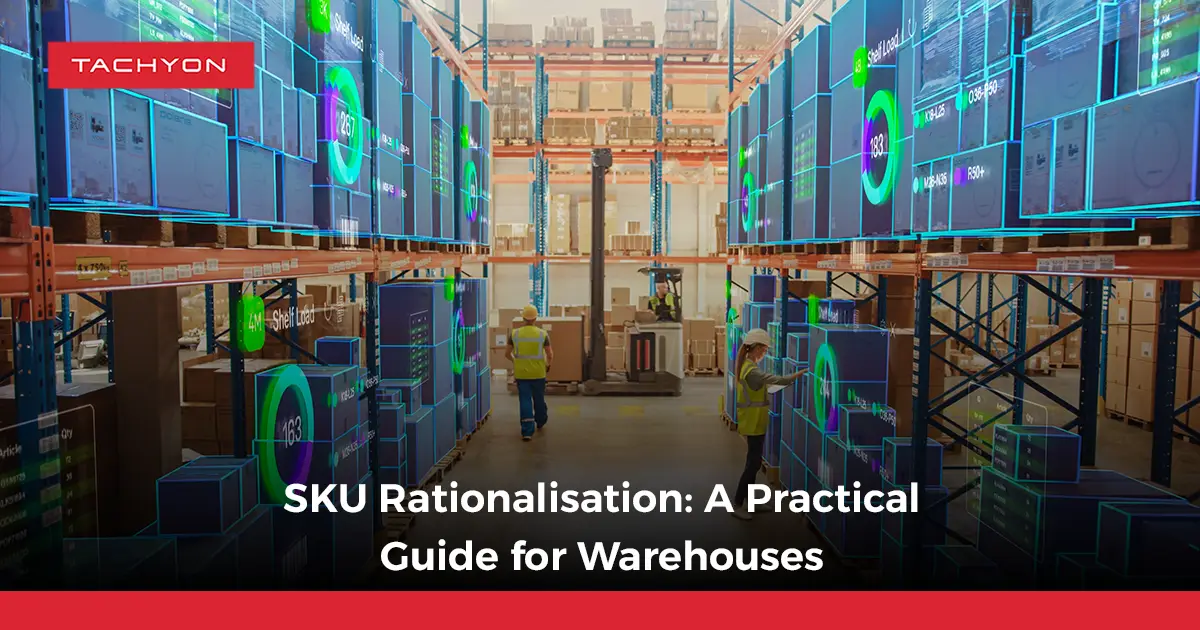
SKU Rationalisation: A Practical Guide for Warehouses
SKU rationalisation is the data-driven process of evaluating a product portfolio to decide which stock-keeping units (SKUs) to keep, consolidate, or eliminate.
What is SKU Rationalisation and Why Does It Matter?
At its core, SKU rationalisation is an analytical evaluation of every item in a company’s inventory to determine its true commercial value and operational impact. Rather than keeping every product active indefinitely, this strategy assesses whether a specific item generates sufficient profit to justify the space, labor, and capital it consumes.
The Dangers of SKU Proliferation
Unchecked product portfolio expansion without regular evaluation creates severe operational bottlenecks that ripple across the entire supply chain. When businesses continuously add items without purging dead or low-impact inventory, they face cascading structural challenges:
- Inflated Storage and Warehousing Costs: Slow-moving, obsolete, or dead stock occupies valuable pallet positions and vertical racking space that should be reserved for high-velocity, high-margin items. This forces businesses to rent excess off-site storage or expand facilities prematurely simply to house unproductive inventory.
- Complicated Picking Operations and Human Error: Warehouse workers waste precious time navigating bloated catalogs, ambiguous product variations, and cluttered aisles during fulfillment. The sheer density of similar SKUs increases pick errors, slows down order cycle times, and drives up labor costs as pickers struggle to verify exact item matches.
- Tied-Up Working Capital and Cash Flow Drains: Excessive inventory traps critical cash in slow-moving products that generate little to no return. This immobilized capital limits organizational liquidity, restricts investment in core business growth initiatives, and increases exposure to costly inventory write-downs.
The Core Process of SKU Analysis
Executing a successful rationalisation initiative requires a rigorous sku analysis rooted in objective, data-driven metrics rather than emotional attachment to legacy products. Warehouse and supply chain managers must systematically evaluate items using a comprehensive framework of multi-variable criteria to determine true portfolio health:
- Sales Velocity & Turnover Rate Metrics: Analyzing exact transaction histories to identify how frequently an item sells versus how long it sits stagnant on the shelf. This involves categorizing products into fast, medium, and slow movers to spot dead stock immediately before it incurs long-term holding penalties.
- Carrying Costs vs. Net Profit Margins: Calculating the true total cost of ownership for every individual SKU—including warehouse storage space, insurance, handling expenses, shrinkage, and administrative overhead—against the actual net revenue and gross margin generated by each item.
- Cross-Selling Dynamics and Product Dependencies: Assessing the broader ecosystem of the product catalog to ensure that discontinuing a low-volume or niche item does not inadvertently cannibalize the sales of a high-demand complementary product or alienate key customer segments who rely on bundled solutions.

Best Practices for Effective SKU Management
Implementing a sustainable, long-term portfolio review requires seamless cross-functional collaboration between sales, marketing, procurement, and warehouse operations. Effective sku management cannot exist in a silo; it relies on structured, repeatable operational workflows that balance commercial goals with fulfillment efficiency:
- Establish Clear, Quantitative Thresholds: Define rigid, objective performance metrics such as minimum annual sales volume, turnover frequency, or baseline profit marginst hat every item must consistently achieve to remain active in the catalog. Setting these benchmarks eliminates emotional decision-making regarding legacy products.
- Phase Out Redundant Stock Gradually: Instead of abruptly deleting items and risking customer dissatisfaction, execute strategic phase-outs. Reduce reorder quantities, bundle slow movers with high-demand items, or run targeted promotions to clear remaining stock cleanly without alienating loyal buyers.
- Leverage Advanced Technology and WMS Platforms: Utilize sophisticated Warehouse Management Systems (WMS) and enterprise resource planning (ERP) tools to track item lifecycles in real time. Modern software automatically flags stagnant inventory, monitors velocity trends, and generates actionable reports that keep your product catalog lean and profitable.
Transforming Portfolio Optimization into Competitive Advantage
Product portfolio optimization is not a one-time cleanup project; it is an ongoing operational discipline that keeps modern supply chains agile and responsive. By streamlining product catalogs through targeted sku rationalisation, businesses significantly reduce operational friction, lower inventory holding costs, and empower warehouse teams to fulfill orders with maximum speed and accuracy.
When paired with Tachyon’s advanced logistics technology and enterprise warehouse management solutions, organizations gain the deep analytical visibility and automated control needed to master complex inventory lifecycles. Ready to eliminate catalog clutter and turn your inventory data into a powerful growth engine? Partner with Tachyon today to optimize your product portfolio, slash storage overhead, and elevate your fulfillment operations to peak performance.
Frequently Asked Questions About SKU Rationalisation
1. What is SKU rationalisation and why is it essential for warehouses?
SKU rationalisation is the systematic process of evaluating, reviewing, and culling underperforming or redundant stock keeping units (SKUs) from a company’s product catalog. It is essential because unchecked product growth leads to sku proliferation, which inflates storage costs, clogs warehouse aisles, increases pick errors, and traps vital working capital in slow-moving inventory.
2. How often should a business conduct a sku analysis?
While initial cleanups require a comprehensive portfolio review, effective sku management is an ongoing discipline. Most businesses conduct a formal sku analysis quarterly or annually depending on industry seasonality and catalog turnover rates to continuously identify dead stock, re-evaluate holding costs, and maintain a lean inventory profile.
3. How does Tachyon help companies manage product portfolio optimization?
Tachyon integrates advanced logistics technology and enterprise warehouse management systems (WMS) to provide deep analytical visibility into inventory performance. By leveraging real-time data tracking and automated inventory reporting, Tachyon empowers supply chain leaders to execute targeted sku rationalisation, slash storage overhead, and optimize warehouse workflows for maximum operational efficiency.
