
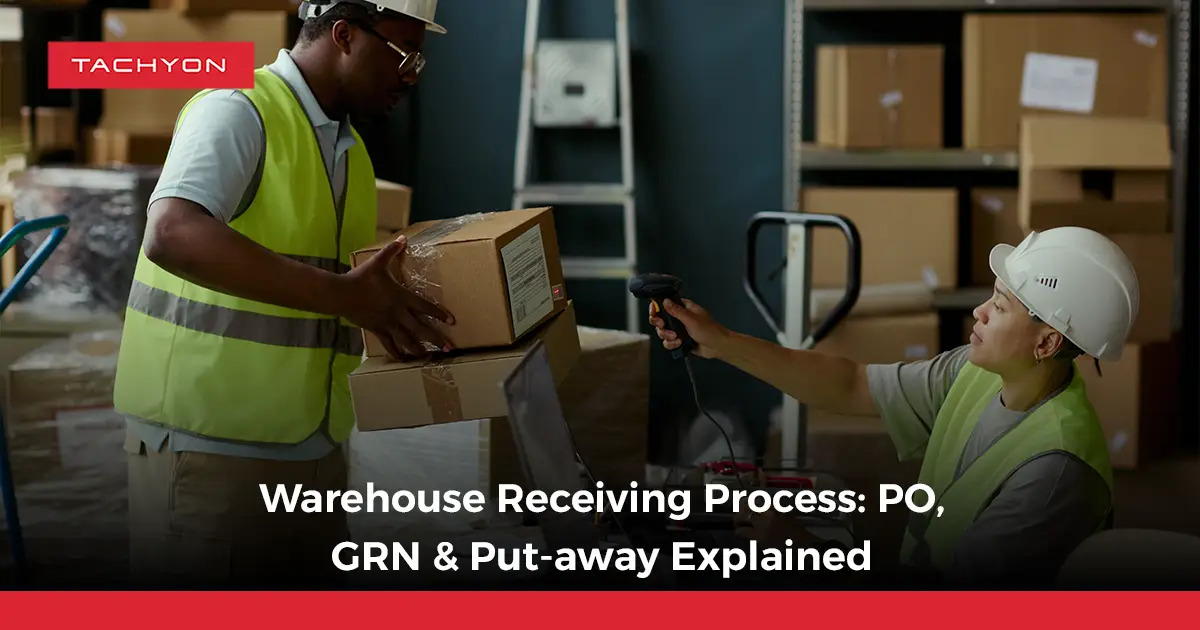
Warehouse Receiving Process: PO, GRN & Put-away Explained
A goods receipt note (GRN) is an internal document created by a buyer’s receiving or warehouse team to formally acknowledge and record the receipt of goods delivered by a supplier.
The Purchase Order Process: Setting the Foundation
Before a single box arrives at the loading dock, the receiving workflow begins with the purchase order process. A Purchase Order (PO) is a legally binding contract issued by a buyer to a vendor, outlining exact product specifications, quantities, agreed-upon prices, and expected delivery timelines.
Why the PO Matters at the Dock
- Baseline Verification: When a shipment arrives, warehouse staff must immediately cross-reference the physical delivery against the open PO to confirm that the supplier sent exactly what was ordered.
- Preventing Unauthorized Shipments: Strict adherence to active POs stops unauthorized or unapproved vendor deliveries from entering the facility and consuming valuable floor space.
- Streamlining Documentation: A verified PO eliminates administrative friction, setting up a seamless transition into physical inspection and inventory logging.
What is a GRN? (Goods Receipt Note)
Once physical inspection is complete at the receiving dock, warehouse personnel generate a goods receipt note. The grn meaning centers on accountability: it is an official internal document acknowledging that specific quantities of items have been physically received, inspected for damage, and accepted into the warehouse.
Key Functions of a GRN
- Three-Way Matching: The GRN is matched against the original purchase order and the vendor’s invoice by the finance department before any payment is released, preventing financial discrepancies.
- Liability Transfer: It officially marks the moment custody and accountability transfer from the transport carrier to the warehouse management team.
- Inventory Activation: Once logged into the system, the GRN triggers the real-time update of stock levels within the digital warehouse ecosystem.
Warehouse Receiving Best Practices
Inefficient dock operations create severe bottlenecks that ripple across the entire fulfillment center, delaying downstream processing and inflating operational costs. Implementing structured, disciplined warehouse receiving best practices ensures high throughput and total inventory accuracy from the precise moment an inbound truck arrives at your facility:
- Schedule and Synchronize Deliveries via Dock Management: Avoid loading bay congestion, idle labor, and chaotic staging areas by enforcing strict, pre-scheduled appointment windows for inbound carriers. Digital dock scheduling aligns receiving capacity with staff availability, ensuring a steady, manageable flow of incoming shipments throughout the shift.
- Enforce Rigorous Quality and Condition Inspections: Inspect incoming packaging, pallet stability, and overall product integrity immediately upon unloading. Catching damaged goods, crushed cartons, or incorrect product specs at the dock prevents defective items from entering storage, polluting your inventory counts, or disrupting downstream picking lines.
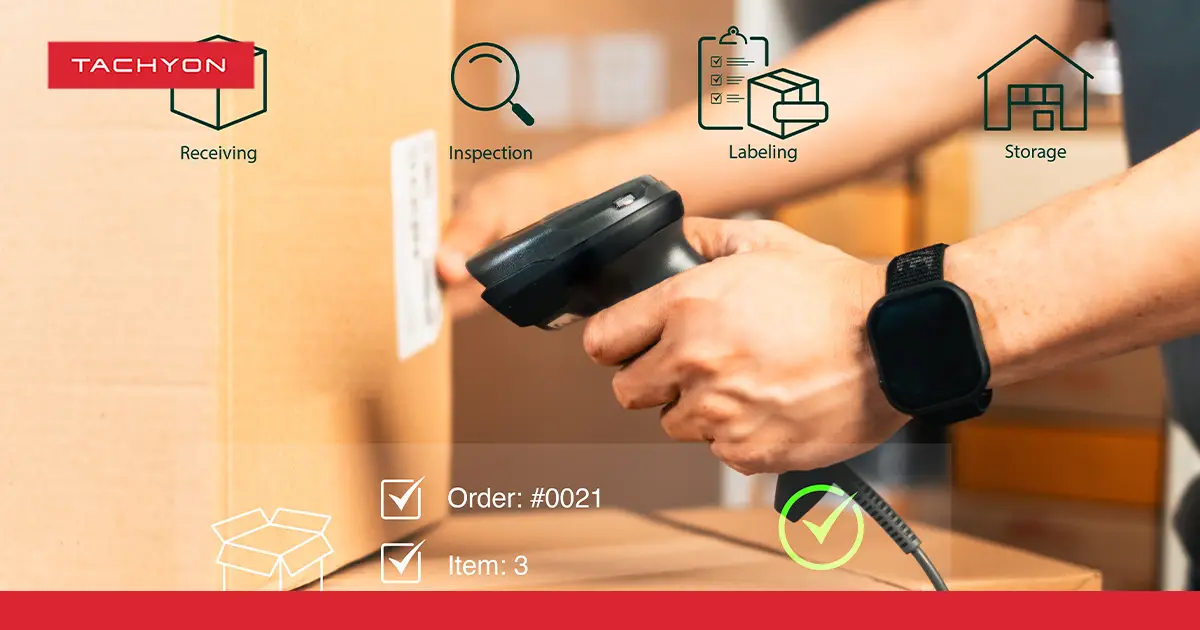
- Leverage Rapid Barcode Scanning and Mobile Terminals: Eliminate error-prone manual paperwork by equipping receiving teams with mobile scanners, ruggedized tablets, and handheld terminals. Instant scanning captures serial numbers, lot codes, expiration dates, and exact quantities on the spot, feeding real-time data directly into your WMS the second goods cross the threshold.
Optimizing Put-Away Strategies
Receiving stock is only half the battle; transferring those items from the loading dock to their optimal storage location safely and efficiently is what separates chaotic warehouses from high-performing fulfillment centers. Choosing and executing the right putaway strategies directly impacts picker travel time, overall space utilization, and fulfillment velocity:
- Direct-to-Stock Put-Away for Fast Movers: Immediately routing high-velocity items straight to primary picking locations or forward-staging zones near the packing stations. This minimizes travel time for handlers and ensures that fast-moving inventory spends minimal time sitting idle on the dock.
- Dynamic Slotting Rules & Intelligent Algorithms: Utilizing system-guided put-away algorithms that continuously evaluate product dimensions, weight classes, seasonal SKU velocity, and safety compliance. This includes automatically enforcing rules such as separating hazardous materials, restricting incompatible items, or placing perishables in climate-controlled zones following strict FEFO protocols.
- System-Directed Routing via Mobile WMS: Eliminating guesswork by directing warehouse operators via mobile handheld instructions to exact shelf and bin locations. This ensures precise placement, prevents misplaced inventory, protects fragile goods, and maximizes the use of vertical space across high-density racking systems.
Warehouse Labor Management: Maximizing Productivity and Safety
Managing warehouse labor efficiently is just as critical as optimizing physical space and inventory flow. As distribution centers face rising fulfillment demands and labor shortages, relying on manual tracking is no longer viable. Modern warehouse operations depend on advanced Labor Management Systems (LMS) integrated with Tachyon’s WMS to monitor workforce productivity, streamline task allocation, and enforce rigorous workplace safety standards without compromising speed.
Automated Guided Vehicles (AGVs) and Robotics in Modern Warehouses
The shift toward lights-out and semi-automated distribution centers is accelerating rapidly across the logistics sector. Implementing Automated Guided Vehicles (AGVs), Autonomous Mobile Robots (AMRs), and automated sorting systems eliminates redundant manual handling, reduces human error, and accelerates horizontal transport. When integrated with Tachyon’s intelligent platform, warehouse robotics seamlessly synchronize with real-time inventory data to maximize throughput and operational resilience.
Batch vs. Zone vs. Wave Picking: Choosing the Right Strategy
Order fulfillment speed is heavily determined by how warehouse pickers navigate aisles and process customer orders. Choosing the correct picking methodology transforms fulfillment efficiency:
- Batch Picking: Grouping multiple orders into a single picking run to reduce travel time for identical items.
- Zone Picking: Assigning operators to specific warehouse zones where they pick items exclusively for passing orders along a conveyor system.
- Wave Picking: Scheduling and releasing groups of orders simultaneously based on carrier schedules, SKU locations, and packing priorities.
Leveraging Tachyon’s advanced WMS routing ensures your warehouse deploys the optimal picking strategy tailored to daily order volume and SKU velocity.
IoT and Real-Time Tracking in Supply Chain Visibility
Complete end-to-end supply chain visibility relies on the integration of Internet of Things (IoT) devices, RFID tags, and smart warehouse sensors. These technologies capture continuous data regarding stock movement, environmental conditions (such as temperature for cold-chain storage), and precise asset locations. By feeding real-time IoT data directly into Tachyon’s central analytics dashboard, supply chain leaders gain unmatched operational transparency, enabling proactive decision-making and flawless inventory control.
Frequently Asked Questions About Goods Receipt Notes (GRN)
1. What is a Goods Receipt Note (GRN) and why is it important?
A Goods Receipt Note is a formal legal and operational document issued by a warehouse team upon receiving, inspecting, and accepting a shipment from a supplier. It is critical because it acts as proof of delivery, triggers the internal three-way match with the purchase order and vendor invoice before payment, and officially updates real-time inventory levels within the warehouse management system.
2. How does a GRN differ from a Purchase Order (PO)?
While a Purchase Order is created before the transaction occurs acting as a binding contract outlining what items, quantities, and prices were ordered from a vendor a GRN is generated after the goods physically arrive and pass inspection. The GRN verifies what was actually delivered against what was originally requested on the PO.
3. How does Tachyon simplify GRN generation and inbound workflows?
Tachyon automates the entire receiving lifecycle by instantly cross-referencing inbound shipments against active digital purchase orders. By integrating mobile barcode scanning and automated matching algorithms, Tachyon enables warehouse staff to generate accurate GRNs on the spot, eliminate paperwork discrepancies, and instantly update stock visibility across the supply chain.
