
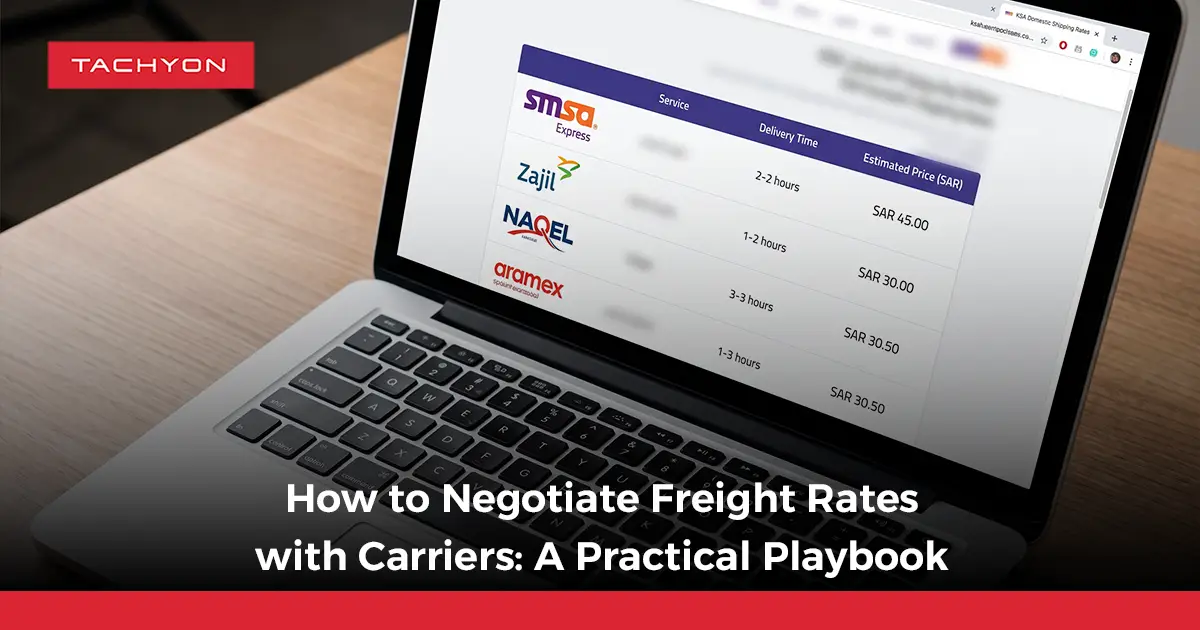
Learning how to negotiate freight rates effectively requires more than asking carriers for lower prices. Shippers need accurate cost data, a clear understanding of their shipping requirements, competitive freight tendering, and well-structured carrier agreements.
By combining freight rate benchmarking with strategic freight sourcing and carrier contract negotiation, businesses can reduce transportation costs while maintaining reliable service, protecting capacity, and improving supply chain performance.
A connected digital logistics platform can also help businesses centralize transportation data, shipment visibility, and carrier performance information needed to support more informed procurement decisions.
Why Freight Rate Negotiation Matters
Freight costs directly affect profit margins, inventory planning, delivery performance, and customer satisfaction. Even a relatively small improvement in transportation rates can generate meaningful savings for businesses shipping large volumes or operating across multiple regions.
However, the lowest quoted rate does not always represent the best commercial outcome. Additional charges, inconsistent transit times, limited capacity, and poor claims handling can offset the savings achieved through an initial discount.
An effective freight negotiation strategy balances three priorities:
- Cost efficiency: Secure competitive rates and reduce avoidable transportation expenses.
- Service reliability: Maintain agreed transit times, pickup schedules, and delivery performance.
- Operational flexibility: Ensure sufficient capacity during seasonal peaks, demand fluctuations, and unexpected disruptions.
The objective is to establish a commercially sustainable relationship with carriers rather than simply obtain the lowest possible quote for an individual shipment.
What Factors Affect Freight Rates?
Before negotiating, shippers should understand the variables that influence carrier pricing. These factors determine whether a quoted rate is competitive and which areas offer the greatest opportunity for savings.
- Shipment volume: Regular, predictable volumes may help businesses negotiate more favorable rates than occasional shipments.
- Shipping lanes: Rates vary by origin, destination, distance, traffic conditions, and the balance between inbound and outbound freight.
- Freight characteristics: Weight, dimensions, density, handling requirements, and commodity type can affect pricing.
- Fuel costs: Fuel surcharges may fluctuate according to carrier policies and applicable fuel indexes.
- Capacity and seasonality: Peak periods, equipment shortages, and demand surges can increase transportation costs.
- Service requirements: Expedited delivery, specialized equipment, time-definite service, and additional handling can increase rates.
- Accessorial charges: Detention, waiting time, re-delivery, and other additional services may increase the final invoice.
Understanding these variables helps procurement and logistics teams identify which costs can be negotiated directly and which depend more heavily on external market conditions.
How to Prepare Before Negotiating Freight Rates
Successful negotiations begin with preparation. Before contacting carriers, build a reliable picture of current shipping activity, service requirements, and total transportation expenditure.
Analyze Your Shipping Data
Collect shipment records covering a representative period, ideally including both normal and peak operating conditions.
Review:
- Shipment volumes.
- Origin-destination pairs.
- Freight classifications where applicable.
- Average shipment weights.
- Delivery requirements.
- Historical carrier performance.
Group shipments by lane, mode, service level, and shipment profile. This makes it easier to identify high-spend routes, inconsistent pricing, underused capacity, and opportunities to consolidate freight.
Define Your Negotiation Priorities
Determine whether the main objective is to reduce total freight expenditure, improve capacity commitments, lower accessorial charges, stabilize pricing, or improve delivery performance.
Rank these objectives before entering discussions. Set a target rate and an acceptable range for each important shipping lane, while also defining minimum service requirements.
Understand Your Shipping Leverage
Carriers may be more willing to negotiate when a shipper offers consistent volumes, accurate forecasts, efficient loading and unloading, flexible pickup windows, or opportunities to combine compatible shipments.
Present these advantages with supporting data rather than relying on general claims about future growth. Credible forecasts and operational commitments create a stronger negotiating position.
Freight Rate Benchmarking: How to Identify Competitive Pricing
Freight rate benchmarking compares your current transportation costs with alternative carrier quotes, historical rates, or relevant market reference data.
It helps determine whether existing agreements remain competitive and provides evidence for negotiations.
For useful freight rate benchmarking, compare shipments with similar characteristics. A full truckload rate should not be compared directly with a less-than-truckload service, and a standard delivery quote should not be treated as equivalent to an expedited service.
Use the following process:
- Standardize shipment information: Ensure weight, dimensions, lane, service level, and delivery requirements are consistent.
- Compare total costs: Include base transportation charges, fuel surcharges, accessorial fees, minimum charges, and other applicable costs.
- Review historical performance: Examine rate changes alongside volume trends, capacity availability, and service quality.
- Request comparable quotes: Obtain prices from multiple qualified carriers using the same shipment assumptions.
- Identify negotiation opportunities: Prioritize lanes where current rates exceed credible alternatives or additional charges appear unusually high.
Benchmarking data should support informed decisions rather than create unrealistic savings targets. Differences in capacity commitments, service reliability, contractual terms, and market conditions can explain why two apparently similar quotes are not directly equivalent.
Freight Tendering: How to Run a Competitive Bidding Process
Freight tendering is the process of inviting carriers to submit proposals for defined transportation requirements.
It gives shippers a structured way to compare pricing, service capabilities, capacity commitments, and contractual terms across multiple providers.
A broader freight procurement strategy can help businesses connect tendering, carrier evaluation, sourcing decisions, and contract management within one structured process.
Step 1: Define the Scope
Specify the shipping lanes, expected shipment volumes, equipment requirements, service levels, pickup and delivery locations, and anticipated contract duration.
Include historical shipping data and realistic volume forecasts to help carriers price the business accurately.
Step 2: Establish Evaluation Criteria
Set consistent criteria before reviewing bids. These may include:
- Total transportation cost.
- Available capacity.
- On-time delivery performance.
- Claims history.
- Geographic coverage.
- Technology integration.
- Sustainability requirements.
- Responsiveness to operational changes.
Assigning appropriate weight to each criterion helps prevent procurement teams from selecting a carrier based on price alone.
Step 3: Invite Qualified Carriers
Invite existing providers and alternative carriers with the relevant network, equipment, and operational capabilities.
Share the same information and submission deadlines with all participants to support a fair comparison.
Step 4: Compare and Clarify Bids
Review submitted rates and identify missing information, exclusions, unusual surcharges, and differences in service assumptions.
Ask carriers to clarify their proposals before making final comparisons.
Step 5: Negotiate Final Terms and Award Lanes
Use the most competitive bids to support final negotiations. Award lanes according to the combination of cost, service quality, capacity, and operational fit.
Consider retaining backup carriers for critical routes or periods when capacity is constrained.
Freight tendering should not be treated as a one-time exercise. Businesses should review contract performance and market conditions regularly to determine when another bidding round is justified.
Carrier Contract Negotiation: Terms You Should Address
Carrier contract negotiation involves agreeing on the commercial and operational conditions under which transportation services will be provided.
A competitive base rate is important, but the surrounding contract terms can have an equally significant effect on total cost and service continuity.
Review the following areas before signing or renewing an agreement:
- Rate structure: Define rates by lane, equipment type, shipment profile, or applicable pricing unit.
- Fuel surcharge methodology: Specify the reference index, adjustment frequency, calculation method, and any applicable limits.
- Accessorial charges: Document charges for detention, waiting time, re-delivery, special handling, and other additional services.
- Capacity commitments: Establish expected volumes, allocation rules, tender acceptance expectations, and procedures for capacity shortages.
- Service-level agreements: Define pickup and delivery expectations, performance measurement, reporting requirements, and remedies for repeated failures where appropriate.
- Payment terms: Agree on invoice timing, payment deadlines, supporting documentation, and the process for disputing charges.
- Contract duration and rate reviews: Specify the contract period, renewal process, and circumstances that allow rates to be reviewed or adjusted.
- Liability and claims: Clarify cargo liability, claims procedures, insurance requirements, and applicable legal responsibilities.
- Termination and contingency provisions: Establish notice periods, exit conditions, and arrangements for maintaining service during transitions.
Make sure the final agreement reflects what both parties have accepted during negotiations. For complex or high-value arrangements, legal and procurement teams should review the terms before execution.
Freight Sourcing Strategies to Improve Cost and Service
Freight sourcing is the broader process of identifying, evaluating, selecting, and managing transportation providers.
While freight tendering is one sourcing method, an effective freight sourcing strategy also considers network design, carrier diversification, shipment consolidation, and long-term supplier relationships.
Use a Balanced Carrier Portfolio
Depending on shipment volume and network requirements, a business may allocate most freight to a primary carrier while retaining secondary providers for overflow, specialized lanes, or contingency coverage.
Businesses that need access to a broader pool of transport capacity can also evaluate truck aggregation as an alternative to relying only on a limited number of directly contracted carriers.
This approach can balance volume-based pricing benefits with the flexibility needed when demand increases or a carrier experiences capacity constraints.
Consolidate Shipments Where Practical
Combining compatible shipments can improve vehicle utilization and reduce the cost per unit transported.
Review delivery schedules, order patterns, and warehouse processes to identify opportunities for consolidation without compromising customer commitments.
Negotiate Based on Total Cost of Service
Compare the full cost of moving freight rather than focusing only on the quoted line-haul rate.
A carrier with a slightly higher base rate may deliver better overall value if it reduces delays, failed deliveries, claims, administrative work, or unexpected accessorial charges.
Build Collaborative Carrier Relationships
Share accurate forecasts, communicate operational changes early, and review performance with carriers on a regular schedule.
Better planning and communication can improve capacity utilization and create opportunities for mutually beneficial cost reductions.
For companies evaluating broader outsourced logistics structures rather than transport carriers alone, understanding the difference between 3PL and 4PL can help clarify how much logistics responsibility should remain in-house and how much should be delegated to external partners.
Common Freight Rate Negotiation Mistakes to Avoid
Even experienced procurement teams can lose savings or create operational problems when negotiations focus too narrowly on price.
- Choosing the cheapest bid automatically: Low rates may come with weak service, limited capacity, or additional charges that reduce expected savings.
- Using inaccurate volume forecasts: Unrealistic projections can undermine pricing discussions and damage trust with carriers.
- Ignoring accessorial charges: A low base rate can become expensive when waiting time, special handling, or re-delivery costs are added.
- Comparing different service levels: Quotes should use consistent delivery windows, equipment requirements, and shipment characteristics.
- Overconcentrating freight with one provider: Excessive dependence on a single carrier can increase disruption risk.
- Accepting unclear contract language: Ambiguous fuel adjustments, rate-review provisions, or capacity commitments can lead to disputes.
- Negotiating without performance data: Historical costs, delivery results, and claims records provide a stronger basis for decisions than assumptions.
- Failing to monitor results: Negotiated savings may disappear if invoices, surcharges, and actual service performance are not reviewed.
A disciplined process combines clear commercial targets with realistic operating requirements and consistent follow-up after the agreement is signed.
How to Measure Freight Negotiation Results
After implementing new rates and contracts, measure whether the changes deliver the expected financial and operational benefits.
Establish a baseline before negotiations and use consistent definitions when comparing results.
- Freight cost per shipment: Measures average transportation expenditure for each shipment.
- Freight cost per unit or weight: Helps compare transportation efficiency across products, shipment profiles, or periods.
- Cost per lane: Tracks expenditure on individual routes and highlights unexpected rate changes.
- Accessorial cost percentage: Shows how much additional charges contribute to total freight expenditure.
- On-time delivery rate: Indicates whether cost improvements are affecting service reliability.
- Tender acceptance rate: Measures how frequently carriers accept assigned shipments and can help identify capacity issues.
- Claims and damage rate: Helps assess whether transportation quality is being maintained.
- Realized savings: Compares actual costs against an agreed baseline while accounting for changes in volume, shipment mix, fuel, and service requirements.
Review these KPIs together. A reduction in quoted rates is not necessarily a realized saving if shipment volumes, accessorial charges, or service failures increase.
Regular reviews help businesses identify problems early and determine when renegotiation or a new tender is appropriate.
Build a More Effective Freight Negotiation Strategy
Ultimately, learning how to negotiate freight rates successfully comes down to combining reliable data, competitive sourcing, disciplined carrier contract negotiation, and ongoing performance management.
By applying freight rate benchmarking, running structured freight tendering processes, and developing a practical freight sourcing strategy, businesses can control transportation costs while protecting capacity, service quality, and long-term supply chain performance.
For businesses building or expanding their own delivery operations, the guide on how to start a courier business in Saudi Arabia also explains how fleet strategy, external transport capacity, technology, and delivery pricing fit into the wider operating model.
Tachyon helps logistics teams connect transportation operations, carrier management, shipment visibility, and performance data through a unified digital logistics platform.
Frequently Asked Questions About Freight Rate Negotiation
1. How can I negotiate better freight rates?
Start by analyzing shipping data, benchmarking comparable rates, and identifying lanes with the greatest savings potential. Use competitive carrier quotes, accurate volume forecasts, and clearly defined service requirements to negotiate rates and contract terms.
2. When should a business renegotiate freight rates?
Consider renegotiation when contracts approach renewal, shipping volumes change materially, service performance declines, market conditions shift, or comparable carrier quotes indicate a meaningful pricing gap.
3. What is freight rate benchmarking?
Freight rate benchmarking is the process of comparing transportation prices against comparable carrier quotes, historical costs, or relevant market data. It helps businesses evaluate competitiveness and establish evidence-based negotiation targets.
4. What is freight tendering?
Freight tendering is a structured process in which shippers invite transportation providers to submit bids for defined lanes or shipping requirements. Bids are evaluated using criteria such as cost, service quality, capacity, and contractual terms.
5. What is the difference between spot rates and contract rates?
Spot rates apply to individual shipments or short-term transportation needs and can change with market conditions. Contract rates are negotiated for an agreed period and defined requirements, although their stability depends on adjustment and surcharge provisions.
6. How many carriers should participate in a freight tender?
There is no universal number. Invite enough qualified carriers to create meaningful competition while keeping the process manageable. The appropriate number depends on lane coverage, shipment volumes, equipment requirements, and the availability of suitable providers.
7. What is the difference between freight sourcing and freight tendering?
Freight sourcing is the broader strategy for identifying, evaluating, selecting, and managing transportation providers. Freight tendering is one method within that strategy used to collect and compare carrier proposals for specific transportation requirements.
