
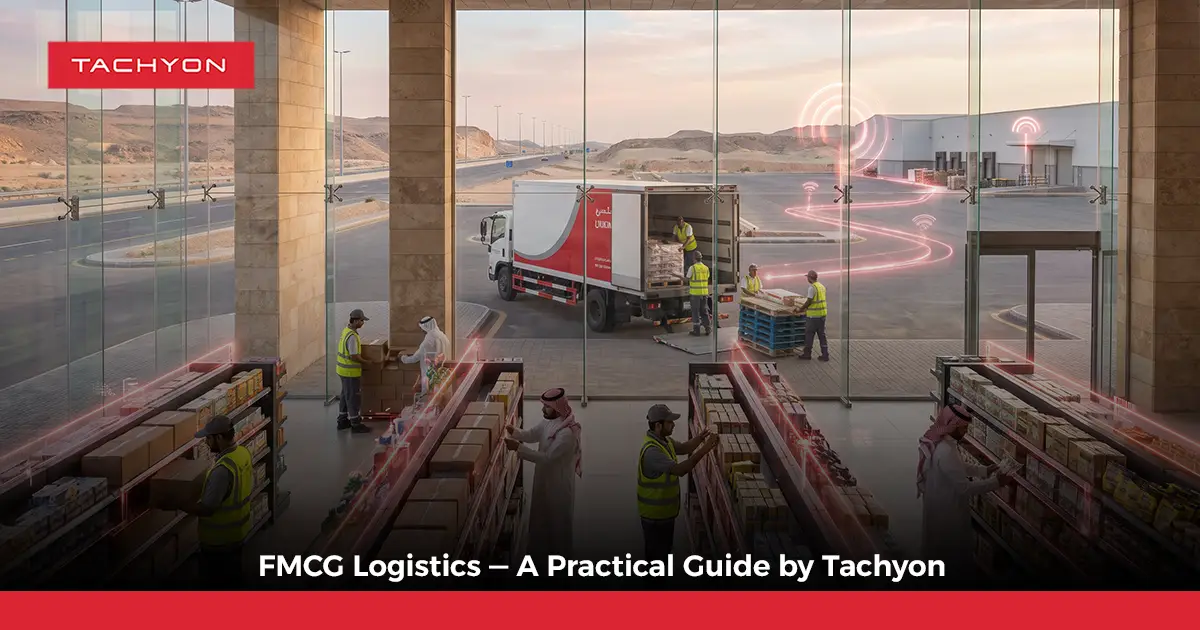
FMCG store replenishment planning is essential for maintaining product availability, controlling inventory costs, and coordinating the movement of goods from central warehouses to retail branches.
In the fast-moving consumer goods (FMCG) sector, frequent purchasing, changing consumer demand, and high inventory turnover create constant pressure on supply chain operations. Without structured replenishment planning, retailers may experience shelf stockouts, excess inventory, emergency freight costs, and inefficient warehouse-to-store distribution.
A data-driven approach helps retail businesses determine which products need replenishment, how much stock each store requires, and when shipments should be dispatched. It also supports better coordination between inventory planning, warehouse operations, and transportation teams.
What Is FMCG Store Replenishment Planning?
FMCG store replenishment planning is the process of calculating inventory requirements and scheduling the movement of products from distribution centers to retail stores based on actual and expected demand.
It connects sales data, inventory availability, warehouse activities, transportation planning, and store receiving processes.
The objective is to maintain appropriate stock levels while reducing unnecessary inventory and transportation costs.
When Does FMCG Replenishment Planning Become Necessary?
Retailers typically need a structured replenishment process when their branch networks expand, SKU volumes increase, or manual ordering methods no longer support operational requirements.
1. Persistent On-Shelf Stockouts
High-demand products may repeatedly disappear from store shelves even when additional stock remains available in central warehouses.
This can indicate problems with replenishment timing, stock allocation, or delivery frequency.
2. Excess Inventory in Branch Backrooms
Some stores may receive quantities that exceed actual demand or available storage capacity.
Excess stock occupies space, ties up working capital, and increases handling and expiration risks for date-sensitive products.
3. Rising Emergency Transportation Costs
Unexpected shortages often require urgent warehouse-to-store or inter-branch transfers.
These unplanned deliveries can increase transportation expenses and disrupt regular distribution schedules.
4. Imbalanced Inventory Across Stores
Retail networks may experience shortages in one branch while nearby locations hold surplus quantities of the same product.
Better demand analysis and allocation rules help distribute inventory according to actual requirements.
5. Poor Coordination With Promotions
Promotional campaigns and seasonal demand can cause sudden changes in consumption.
When marketing schedules are not incorporated into replenishment planning, retailers may face shortages during peak sales periods.
Required Data for FMCG Store Replenishment
Reliable replenishment decisions require accurate data from enterprise systems, including ERP, WMS, TMS, and POS platforms.
- POS sales data: Store-level sales information for each SKU, used to understand product consumption and demand patterns.
- Minimum and maximum stock levels: Reorder thresholds and inventory capacity limits for each retail branch.
- Safety stock parameters: Additional stock levels designed to absorb demand fluctuations and supply delays.
- Lead-time information: Warehouse preparation, loading, transportation, and store receiving durations.
- Receiving constraints: Delivery windows, unloading capacity, and vehicle access restrictions.
- Promotional calendars: Planned campaigns and seasonal activities that may affect expected demand.
Step-by-Step FMCG Store Replenishment Workflow
- Analyze sales and synchronize inventory records.
- Calculate replenishment requirements.
- Consolidate shipments and plan delivery routes.
- Prepare and load goods at the warehouse.
- Execute store deliveries and confirm receipt.
- Measure performance and improve future cycles.
Step 1: Demand Sensing and Inventory Synchronization
The process begins by comparing POS sales, inventory balances, and expected demand across retail branches.
Accurate data helps planners identify products approaching reorder thresholds and determine the appropriate replenishment frequency.
Step 2: Automated Replenishment Calculation
Inventory planning systems can calculate replenishment quantities using demand forecasts, safety stock requirements, lead times, and incoming shipments.
Approved requirements may then be converted into replenishment or transfer orders through compatible enterprise systems.
Step 3: Load Consolidation and Route Planning
Transportation teams group compatible store orders according to destination, volume, weight, and receiving windows.
Multi-stop route planning helps organize delivery sequences and improve vehicle utilization.
For FMCG businesses operating multiple distribution centers and branches, FMCG logistics solutions from Tachyon support the coordination of transportation activities, shipment planning, and distribution operations.
Step 4: Warehouse Picking and Staging
Warehouse personnel prepare products for dispatch according to confirmed replenishment orders.
For date-sensitive goods, First-Expired, First-Out (FEFO) procedures may help prioritize products with earlier expiration dates.
Loading arrangements should consider delivery sequence, cargo stability, and product handling requirements.
Step 5: Delivery Execution and Electronic Proof of Delivery
Drivers complete planned deliveries within the receiving windows of individual branches.
Receiving teams verify quantities, record discrepancies, and confirm delivery completion.
Electronic Proof of Delivery (e-POD) helps document receipt and supports the reconciliation of transportation records.
Automatic stock updates require suitable integration between delivery, receiving, and inventory systems.
Common FMCG Replenishment Problems and Solutions
| Operational Problem | Impact | Recommended Solution |
|---|---|---|
| Manual store ordering | Inconsistent replenishment quantities and stock imbalances. | Use sales and inventory data with controlled manual adjustments. |
| Ignoring store capacity | Overcrowded storage areas and increased handling costs. | Include store storage constraints in replenishment calculations. |
| Inaccurate inventory records | Incorrect reorder decisions and unexpected stockouts. | Conduct regular cycle counts and investigate discrepancies. |
| Underutilized delivery vehicles | Higher transportation cost per shipment. | Consolidate compatible orders and optimize distribution routes. |
| Uncoordinated promotions | Unexpected shortages during marketing campaigns. | Integrate promotional plans into demand forecasting. |
Transport Planning and Fleet Readiness
Reliable warehouse-to-store replenishment requires more than accurate inventory calculations. Delivery performance also depends on vehicle availability, maintenance planning, driver assignments, and transportation costs.
The Tachyon Fleet Management System supports fleet operations through vehicle maintenance records, fuel monitoring, operating expenses, and compatible GPS or IoT integrations.
Combining inventory and transportation planning with reliable fleet information helps distribution teams organize replenishment routes more effectively.
Key Performance Indicators for FMCG Replenishment
- On-Shelf Availability (OSA): Measures whether products are available for purchase on store shelves.
- On-Time In-Full (OTIF): Measures the percentage of orders delivered on time and in the required quantities.
- Forecast Accuracy: Evaluates how closely predicted demand matches actual demand.
- Replenishment Cycle Time: Measures the duration from the replenishment trigger to product availability at the store.
- Inventory Turnover: Indicates how frequently stock is sold and replaced.
- Emergency Delivery Rate: Tracks the share of replenishment movements requiring unplanned transportation.
Performance targets should be established using historical results, product characteristics, and business requirements rather than assuming a single standard applies to all FMCG retailers.
Practical Example: A Multi-Branch Retail Network
The following scenario is illustrative and does not represent a verified Tachyon customer case study.
Consider a supermarket chain operating multiple branches across Saudi Arabia. Store managers manually submit replenishment requests, while warehouse and transportation teams organize deliveries using separate systems.
Some branches experience shortages of high-demand products, while others hold excess inventory. Emergency transfers also increase transportation complexity.
The company could improve its replenishment process by:
- Combining POS sales data with store inventory balances.
- Defining suitable replenishment thresholds for each location.
- Consolidating compatible store orders into planned delivery routes.
- Coordinating warehouse dispatches with store receiving schedules.
- Using digital delivery records to document completed shipments.
- Tracking OSA, OTIF, inventory turnover, and transport costs.
The results should be measured against a documented operational baseline rather than relying on assumed savings percentages.
Conclusion
FMCG store replenishment planning helps retail businesses maintain product availability, control inventory levels, and organize efficient warehouse-to-store distribution.
Successful replenishment depends on reliable inventory information, appropriate demand forecasts, coordinated warehouse operations, and dependable transportation execution.
Digital logistics solutions can support shipment coordination, route planning, delivery tracking, and performance measurement across complex retail distribution networks.
Improve FMCG Distribution With Tachyon
Are inventory imbalances, emergency deliveries, or complex store replenishment schedules affecting your operations?
Tachyon provides logistics solutions that support shipment planning, transportation coordination, delivery visibility, and operational reporting.
Explore Tachyon’s FMCG Logistics Solutions and Request a Demo
Frequently Asked Questions About FMCG Store Replenishment
1. When do companies need FMCG store replenishment planning?
Businesses need structured replenishment planning when expanding store networks, facing frequent stockouts, managing excess inventory, or experiencing rising emergency transportation costs.
2. What data is required?
Important data includes POS sales, inventory balances, safety stock levels, replenishment lead times, store receiving constraints, and promotional schedules.
3. What are common replenishment mistakes?
Common mistakes include inaccurate inventory records, excessive manual ordering, ignoring store capacity, poor shipment consolidation, and failing to account for promotions.
4. How can businesses measure replenishment performance?
Key indicators include On-Shelf Availability, OTIF, demand forecast accuracy, replenishment cycle time, inventory turnover, and emergency delivery frequency.
5. How does transportation planning support replenishment?
Transportation planning helps organize multi-stop routes, consolidate compatible shipments, coordinate receiving windows, and monitor delivery execution.
