
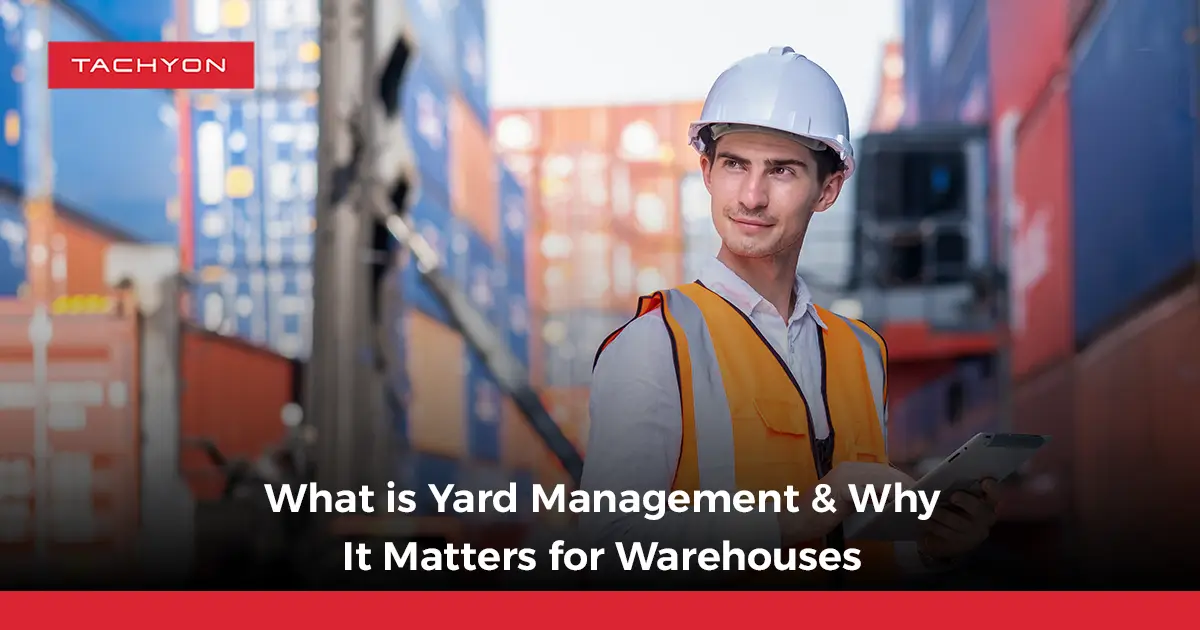
In modern supply chain and logistics ecosystems, the physical yard outside a distribution center acts as the critical bridge connecting long-haul transportation with internal warehouse operations. What is yard management, and why is it so vital? While many businesses focus heavily on internal workflows or fleet transport, the staging area between the gate and the loading dock often dictates overall operational velocity.
Without effective control over incoming trucks, trailers, and staging lanes, even advanced warehouses can experience severe bottlenecks. Maintaining complete yard visibility and streamlined coordination is essential for ensuring that goods flow efficiently from the yard into the facility without unnecessary delays.
What Is Yard Management?
Yard management refers to the coordination, tracking, and optimization of the movement of trucks, trailers, and cargo within the physical staging area outside a warehouse or distribution facility.
- Yard Management Meaning: In the broader supply chain, it represents the operational control layer that bridges external transportation networks and internal warehouse processing.
- What is a Yard in Warehouses? It is the physical apron, parking area, and dock-door zone where trailers are parked, staged, and prepared for loading or unloading.
- Yard Management vs. Warehouse Management: While warehouse management focuses on inventory storage, picking, and packing inside the facility, yard management governs external fleet assets, trailer positioning, and truck movement outside the warehouse.
- Bridging Transport and Warehousing: Yard management transforms carrier arrivals into a more organized and predictable intake and dispatch process.
How Does Yard Management Work?
The standard lifecycle of a truck moving through a facility involves several sequential touchpoints:
1. Truck and Trailer Check-In
Upon arrival at the facility gate, drivers check in, verify documentation, and log carrier details into the system.
2. Dock Assignment
The vehicle is assigned a specific loading or unloading dock door based on priority, cargo type, and door availability.
3. Trailer Movement and Positioning
Yard jockeys, also known as spotters, hitch and move trailers from the parking area to the assigned loading dock.
4. Loading and Unloading
Warehouse staff process the cargo, moving inventory between the trailer and the facility floor.
5. Yard Check and Trailer Tracking
Trailers are logged as empty, loaded, or staging, and their physical locations are recorded within the yard map.
6. Truck Check-Out
Once documentation is finalized and loading is complete, the truck checks out and departs the facility.
What Are Yard Operations?
Executing efficient yard operations requires managing a dynamic checklist of daily activities:
- Receiving and processing incoming trucks and trailers.
- Managing gate check-in and check-out procedures.
- Maintaining precise tracking of trailer locations across the yard.
- Directing trucks safely to designated loading and unloading docks.
- Orchestrating physical trailer shunting and repositioning.
- Monitoring real-time shipment and cargo statuses.
- Overseeing dock scheduling to prevent scheduling conflicts.
Why Does Yard Management Matter for Warehouses?
Effective yard management directly impacts the productivity, cost-efficiency, and throughput of the entire supply chain facility:
- Reduces Truck Waiting Time: Helps reduce prolonged carrier standstills outside facility gates.
- Improves Dock Utilization: Helps maximize productive use of loading bays and reduce idle dock time.
- Reduces Yard Congestion: Keeps driveways and parking areas more organized.
- Speeds Up Inbound and Outbound Operations: Supports faster transfer of freight between transport and storage.
- Improves Coordination Between Yard and Warehouse: Synchronizes dock readiness with internal labor availability.
- Helps Prevent Trailer Misplacement: Provides teams with greater visibility into the location of loaded and empty trailers.
What Is Yard Visibility and Why Is It Important?
Yard visibility refers to the real-time, end-to-end transparency warehouse managers have over activities happening outside the facility.
- Real-Time Operational Clarity: Knowing the status, contents, and location of every trailer parked in the yard.
- Tracking Assets and Conditions: Accessing information about whether a trailer is loaded, empty, damaged, or awaiting inspection.
- Monitoring Arrival and Departure Times: Tracking carrier schedules to anticipate workflow peaks.
- Detecting Delays and Bottlenecks Early: Identifying congestion before it disrupts warehouse operations.
- Connecting Yard Data to Warehouse Systems: Feeding external movement data into internal warehouse workflows.
Typical Streamlined Flow: Truck Arrival → Check-In → Yard Assignment → Dock → Loading/Unloading → Check-Out
Trailer Yard Management: Managing Trailers Efficiently
Trailer yard management focuses specifically on tracking, organizing, and utilizing trailer assets while they remain on facility grounds:
- Tracking Trailer Locations: Using digital maps or asset tags to identify exact row and stall locations.
- Managing Empty and Loaded Trailers: Categorizing assets to ensure empty trailers are available for outbound loads and loaded units are prioritized for unloading.
- Prioritizing Trailers for Dock Assignment: Sequencing trailers based on appointment times, delivery urgency, or product perishability.
- Reducing Trailer Dwell Time: Minimizing the time trailers remain idle in the yard.
- Managing Trailer Moves: Optimizing shunter routes to reduce unnecessary movements and operating time.
The Risk of Lost Visibility: When visibility breaks down, trailers may be misplaced in large yards, forcing staff to conduct physical searches that consume time and delay warehouse processing.
Common Yard Management Challenges
- Severe yard congestion during peak fulfillment periods.
- Inability to locate specific trailers quickly.
- Truck and carrier delays.
- Poor communication between yard staff and dock workers.
- Heavy reliance on manual paper logs and radio communication.
- Fragmented tracking of trailer movements.
- Lack of real-time shipment status visibility.
- High trailer dwell times that may lead to detention charges.
Manual Yard Management vs. Digital Yard Management
| Operational Area | Manual Yard Management | Digital Yard Management |
|---|---|---|
| Data Recording | Heavy reliance on manual paper logs and clipboards. | Real-time digital tracking and automated records. |
| Trailer Tracking | Difficult asset tracking that may require physical yard searches. | Digital mapping and precise location monitoring. |
| Visibility | Limited, fragmented, and delayed updates. | More comprehensive yard visibility. |
| Data Accuracy | More vulnerable to human error and manual entry mistakes. | More consistent digital records and automated logging. |
| Performance Tracking | Difficult performance analysis without historical metrics. | Reporting, analytics, and operational KPIs. |
How Yard Management Systems Improve Warehouse Operations
A dedicated Yard Management System (YMS) provides the software capabilities needed to digitize and coordinate external yard logistics:
- Digital Check-In and Registration: Automates truck and driver logging at the gate.
- Automated Appointment Scheduling: Helps distribute carrier arrival times more effectively.
- Smart Dock Door Allocation: Matches incoming loads with suitable dock bays.
- Trailer Movement Tracking: Coordinates spotter tasks digitally and in real time.
- Comprehensive Yard Visibility: Provides a live view of the staging area.
- System Integration: Connects with existing WMS and Transportation Management Systems.
- Proactive Delay Alerts: Highlights congestion, extended dwell times, and scheduling conflicts.
Key Yard Management Metrics to Track
Tracking Key Performance Indicators (KPIs) is essential for measuring yard efficiency, identifying bottlenecks, and supporting integration with your core Warehouse Management System:
- Trailer Dwell Time: The total duration a trailer spends parked on facility grounds before being unloaded and released.
- Truck Turnaround Time: The elapsed time from a truck’s gate check-in to final departure.
- Dock Utilization: The percentage of operating hours that loading bays are actively processing freight.
- Yard Capacity Utilization: The ratio of occupied parking stalls to total yard capacity.
- Average Check-In Time: The time required to process arriving carriers and documentation.
- Average Check-Out Time: The time required to clear departing vehicles.
- Trailer Move Time: The duration required for yard jockeys to reposition equipment.
How to Improve Yard Operations
- Standardize Check-In and Check-Out: Establish consistent gate procedures for incoming and outgoing carriers.
- Improve Dock Scheduling: Use appointment windows to distribute arrivals more evenly across shifts.
- Track Trailer Locations Actively: Use digital logs, RFID, or other tracking technologies to maintain accurate asset records.
- Reduce Unnecessary Trailer Moves: Plan shunter tasks logically to minimize wasted movements.
- Connect Yard and Warehouse Data: Ensure real-time communication between yard activities and internal inventory systems.
- Leverage Real-Time Yard Visibility: Provide supervisors with live operational data for faster decision-making.
When Does a Warehouse Need a Yard Management System?
Implementing a dedicated Yard Management System becomes increasingly valuable when manual processes and fragmented communication can no longer keep pace with operational demands. A facility may benefit from a dedicated solution if it experiences:
- High volumes of daily truck arrivals and departures.
- Large numbers of trailers parked simultaneously on-site.
- Frequent yard congestion and gridlock.
- Difficulty locating specific trailers quickly.
- Excessive truck waiting times and carrier detention charges.
- Communication gaps between yard teams and warehouse staff.
- Heavy reliance on manual phone calls, radios, and paper records.
Yard Management vs. Warehouse Management vs. Transportation Management
| System / Domain | Core Operational Function |
|---|---|
| Yard Management | Directs the movement, staging, and tracking of trucks and trailers within the facility yard. |
| Warehouse Management | Controls internal inventory tracking, storage allocation, picking, packing, and fulfillment execution. |
| Transportation Management | Plans, optimizes, and executes freight routing, carrier selection, shipment movement, and transportation operations. |
Working Together: Modern supply chains can achieve greater visibility and coordination when YMS, WMS, and TMS platforms operate as an integrated ecosystem rather than isolated systems.
Frequently Asked Questions About Yard Management
1. What is yard management?
Yard management is the practice of monitoring, coordinating, and optimizing the movement of trucks, trailers, and shipping containers in the staging area outside a distribution center.
2. What does yard management mean?
It means controlling the transitional space between external transport carriers and internal warehouse operations to support smooth freight flow.
3. What are yard operations?
Yard operations include gate check-ins, trailer spotting, dock door assignments, yard checks, and coordination of outgoing shipments.
4. What is a yard management system?
A YMS is a software platform designed to track trailer locations, schedule dock appointments, and improve visibility across a facility’s yard.
5. What is trailer yard management?
It focuses on tracking, staging, and managing trailer assets while they are parked on facility grounds.
6. Why is yard visibility important?
Yard visibility helps reduce misplaced assets, identify delays, improve dock coordination, and align warehouse labor with incoming freight.
7. How does yard management improve warehouse efficiency?
By improving dock scheduling, reducing truck turnaround times, and coordinating trailer movement, yard management supports more efficient inventory flow into and out of the facility.
8. What is the difference between yard management and warehouse management?
Yard management governs external yard assets and trailer movements, while warehouse management governs internal inventory storage and fulfillment processes.
Improve Your Yard Management and Warehouse Operations
Streamlining your supply chain requires looking beyond warehouse walls and improving the staging area where transport meets storage. Enhancing yard operations, increasing operational visibility, and integrating smart logistics solutions with warehouse and transportation systems can help reduce bottlenecks and improve facility throughput.
Ready to improve your facility performance? Explore Tachyon’s Yard Management System to learn how digital yard visibility, dock scheduling, and connected logistics operations can support more efficient warehouse and transportation workflows.
