
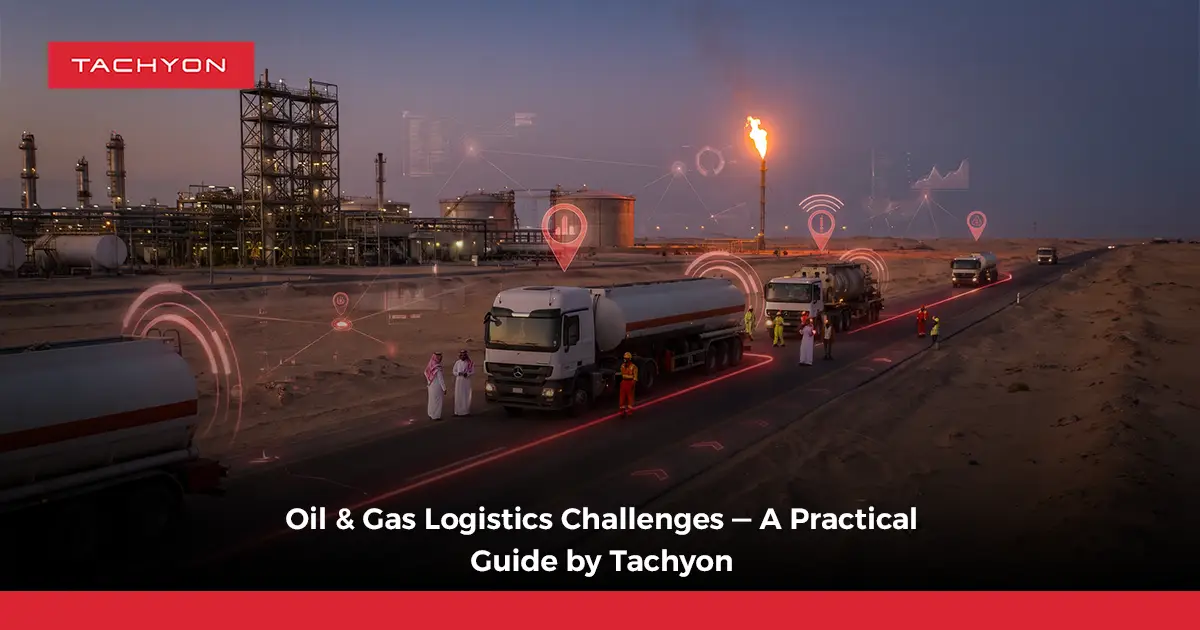
Oil and gas logistics challenges involve transporting heavy equipment, critical spare parts, specialized materials, and potentially hazardous cargo across complex industrial networks. In Saudi Arabia, these operations often connect remote oilfields, processing facilities, industrial cities, ports, warehouses, and suppliers over considerable distances.
Unlike conventional freight distribution, oil and gas logistics must account for strict operational schedules, specialized transport requirements, health and safety procedures, and the consequences of delayed equipment deliveries.
As Saudi Arabia continues to develop its energy infrastructure and industrial capabilities, energy companies and logistics providers increasingly need reliable processes for transport planning, fleet operations, shipment tracking, and supply chain coordination.
This guide examines the main challenges facing oil and gas logistics in Saudi Arabia, explains their operational importance, and outlines practical digital strategies for improving transport visibility, fleet efficiency, and delivery reliability.
What Are Oil and Gas Logistics Challenges?
Oil and gas logistics challenges refer to the operational, technical, environmental, and regulatory difficulties involved in transporting, storing, and distributing the equipment, materials, and supplies used throughout the energy sector.
These activities may include delivering drilling equipment, transporting industrial piping, moving spare parts between facilities, coordinating chemical shipments, and supplying remote production sites.
Several characteristics make energy logistics more complex than standard commercial transportation.
1. Time-Critical Operational Requirements
Energy production and processing facilities depend on the availability of essential equipment and supplies. A delayed spare part, drilling component, or industrial material can interrupt maintenance activities or postpone scheduled operations.
In some circumstances, critical equipment shortages may contribute to unplanned downtime. The financial impact varies significantly depending on the facility, the affected operation, and the duration of the interruption.
For this reason, transportation planning must consider shipment criticality and operational consequences rather than relying on delivery dates alone.
2. Heavy Lift and Project Cargo Transportation
Oil and gas projects frequently involve equipment that exceeds conventional cargo dimensions or weight limits.
Transporting drilling equipment, large pipes, industrial generators, or other oversized machinery may require specialized trailers, route surveys, suitable loading equipment, and applicable transport permits.
Logistics teams must assess road conditions, bridge restrictions, cargo dimensions, vehicle capabilities, and site-access requirements before dispatching these shipments.
3. Health, Safety, and Environmental Requirements
Some energy-related shipments involve hazardous substances or equipment requiring specialized handling procedures.
Transportation operators must follow the Saudi regulations applicable to the cargo and transport activity, along with relevant site-specific HSE requirements.
International dangerous goods frameworks, including ADR, may provide technical reference points in relevant contexts. However, they should not be presented as automatically replacing the applicable Saudi regulatory requirements.
Digital logistics systems can support recordkeeping and operational coordination, but they do not replace mandatory safety inspections, permits, training, or regulatory approvals.
4. Geographic and Environmental Complexity
Energy logistics frequently connects industrial facilities with remote desert locations and offshore operations.
Long transportation distances, limited service infrastructure, demanding operating conditions, and coordination between land and marine transport providers can complicate delivery planning.
These conditions increase the importance of vehicle readiness, route planning, preventive maintenance, and reliable communication between logistics teams.
Why Oil and Gas Logistics Matters in Saudi Arabia
Saudi Arabia’s energy sector relies on extensive transportation and supply networks connecting suppliers, industrial cities, processing facilities, ports, and operational sites.
Improving these networks can help companies coordinate equipment movement, manage logistics costs, and maintain reliable access to essential materials.
Supporting National Energy Development and Local Supply Chains
Saudi Arabia’s energy and industrial development initiatives create continued demand for reliable equipment transportation and logistics services.
Major gas developments, including projects associated with the Jafurah field, illustrate the scale of the country’s energy infrastructure requirements.
Coordinating transport activities across suppliers, carriers, and industrial sites can support local logistics participation and improve supply chain resilience.
Connected systems are particularly useful when operational teams need consistent information about shipment assignments, vehicle availability, and delivery progress.
Reducing Dwell Time and Indirect Operating Costs
Vehicle queues and extended waiting periods can create inefficiencies at industrial facilities, ports, warehouses, and remote site entrances.
When trucks arrive without sufficient coordination, unloading areas may become congested and drivers can spend additional time waiting for access or receiving instructions.
Improved dispatch coordination and delivery scheduling can help reduce unnecessary waiting, increase productive vehicle utilization, and identify recurring operational bottlenecks.
Improving Fuel Efficiency and Reducing Empty Mileage
Long-haul transportation can generate unnecessary costs when vehicles travel without cargo or follow inefficient routes.
Reviewing trip records, fuel consumption, vehicle utilization, and return-load opportunities can help logistics teams identify potential improvements.
Reducing unnecessary mileage and fuel use may also contribute to lower transportation-related emissions, supporting broader environmental objectives.
Actual emissions reductions should be calculated from reliable operational data rather than assumed from the adoption of digital software alone.
Connecting Industrial Sites With Logistics Infrastructure
Energy supply chains depend on coordination between industrial locations, logistics hubs, ports, and supplier facilities.
Better data sharing can make it easier to identify shipment delays, coordinate equipment deliveries, and manage changes in transport schedules.
The practical value comes from connecting operational processes and responsibilities rather than simply increasing the number of systems being used.
Common Oil and Gas Logistics Challenges and Practical Solutions
Addressing energy logistics problems requires a combination of operational planning, appropriate safety procedures, capable transportation partners, and connected digital systems.
| Logistics Challenge | Operational Impact | Recommended Approach |
|---|---|---|
| Delayed delivery of critical spare parts | Maintenance disruptions and potential operational downtime. | Classify critical shipments and plan deliveries according to operational priorities. |
| Oversized and heavy equipment movements | Route restrictions, handling risks, and possible permitting delays. | Conduct route assessments and verify equipment suitability and applicable permissions. |
| Limited shipment visibility | Difficulty identifying vehicle locations and responding to delays. | Use appropriate shipment tracking, trip status updates, and operational reporting. |
| Unexpected vehicle breakdowns | Missed delivery windows and additional maintenance costs. | Improve preventive maintenance schedules and monitor vehicle operating data. |
| Extended waiting time at site gates | Increased dwell time and reduced fleet productivity. | Coordinate arrival schedules and review site entry and receiving procedures. |
| Disconnected enterprise systems | Duplicate data entry, delayed updates, and inconsistent shipment records. | Establish suitable integration workflows between transport and enterprise systems. |
How Tachyon Supports Oil and Gas Logistics Operations
Digital logistics platforms can help energy companies organize transportation activities and improve the availability of operational information across carriers, vehicles, warehouses, and delivery locations.
Tachyon provides logistics technology designed to support shipment coordination, transport visibility, fleet management, operational documentation, and integration with compatible enterprise systems.
Explore Tachyon’s oil and gas logistics solutions to understand how these capabilities can support equipment and material movement between suppliers, industrial facilities, and remote sites.
- Register transportation requests and identify shipment priorities.
- Plan transport assignments and select suitable vehicles and carriers.
- Monitor shipments and vehicle movements during transportation.
- Document delivery milestones and manage operational exceptions.
- Review performance data to improve planning and resource utilization.
1. Data Integration and ERP Connectivity
Energy companies often use enterprise resource planning systems to manage purchasing, inventory, and equipment requirements.
Transportation management systems support a different part of the process, including shipment planning, trip execution, carrier coordination, and delivery status.
When suitable integrations are available, linking these systems can reduce repeated data entry and improve the flow of information between procurement and logistics teams.
Tachyon supports ERP and logistics integrations, with the implementation scope depending on the systems involved and the available interfaces.
2. Real-Time Shipment and Vehicle Visibility
Tracking vehicle locations and shipment milestones can help operations teams understand where equipment and materials are moving and identify delays that require attention.
GPS information, trip status updates, and relevant operational alerts can contribute to better transport coordination.
Additional cargo-condition monitoring, such as measuring pressure or temperature inside specialized containers, requires appropriate sensors and validated integration arrangements. Such capabilities should not be assumed to apply automatically to all oil and gas shipments.
3. Fleet Management and Preventive Maintenance
Vehicle availability is particularly important when transportation routes cover long distances or remote areas with limited repair facilities.
A fleet management system such as Tachyon FMS can support vehicle maintenance planning, fuel monitoring, expense management, driver-related records, and GPS or IoT integration.
Fleet managers can use this information to review vehicle condition, schedule servicing, identify unusual operating costs, and improve asset utilization.
These activities can reduce avoidable operational disruptions, although actual performance improvements depend on equipment condition, data quality, and implementation practices.
4. Delivery Documentation and Exception Management
Reliable delivery documentation is important when equipment and supplies move between multiple logistics providers and operating sites.
Digital proof of delivery can help record shipment receipt, handover times, receiving-party acknowledgments, and relevant exceptions.
When delays or discrepancies occur, structured records help teams identify the affected shipment and coordinate appropriate follow-up actions.
However, verifying hazardous-material permits, driver certifications, or specialized cargo clearances remains subject to the applicable compliance procedures and system capabilities. A transport platform should not be treated as a substitute for authorized regulatory verification.
Key KPIs for Oil and Gas Logistics Performance
Energy logistics performance should be monitored through clearly defined indicators that cover delivery reliability, fleet readiness, and transportation efficiency.
- On-Time Delivery Rate: The percentage of shipments arriving within their agreed delivery windows, with separate reporting for critical supplies where appropriate.
- Vehicle Dwell Time: The average time trucks spend waiting at loading locations, industrial gates, and receiving facilities.
- Fleet Availability: The proportion of vehicles available for operational assignments compared with the total relevant fleet.
- Empty Mileage Rate: The percentage of vehicle mileage completed without cargo, measured against total recorded mileage.
- Transport Cost per Trip: The cost of completing each transport assignment using consistently defined expenses such as fuel, maintenance, and operating time.
- Unplanned Breakdown Rate: The frequency of vehicle failures that interrupt or delay scheduled transportation activities.
- Delivery Record Completeness: The percentage of shipments with all required handover and delivery documentation.
Companies should establish baseline values and consistent measurement periods before evaluating improvements. Performance comparisons should account for the differences between routine deliveries, remote-site transportation, and specialized heavy-lift movements.
Practical Strategies for Improving Oil and Gas Logistics in Saudi Arabia
Improving energy logistics does not necessarily require replacing every operational process at once. A structured implementation approach can help companies address the most significant risks and inefficiencies first.
- Prioritize critical shipments: Identify equipment and materials whose delayed arrival could significantly disrupt operations, and establish suitable transport arrangements.
- Standardize carrier and vehicle information: Maintain accurate records of vehicle capacity, transport equipment, drivers, operating requirements, and applicable site-access conditions.
- Improve heavy-lift planning: Verify cargo dimensions, selected vehicles, route suitability, loading procedures, and required permissions before dispatch.
- Strengthen fleet maintenance: Use vehicle records and relevant operating data to schedule servicing and identify potential equipment issues.
- Coordinate delivery windows: Align truck arrivals with loading and unloading capacity at industrial facilities and remote locations.
- Connect transport information: Improve data exchange between procurement, inventory, transportation, and receiving teams using appropriate integration methods.
- Monitor measurable results: Track delivery reliability, dwell time, transport expenses, vehicle availability, and avoidable mileage to identify opportunities for improvement.
The Future of Digital Transformation in Energy Logistics
Digital transformation in the oil and gas logistics sector increasingly focuses on connecting operational data, improving asset visibility, and supporting more informed transportation decisions.
Advanced reporting and analytical tools can help companies identify recurring delays, unusual maintenance patterns, inefficient vehicle utilization, and opportunities to improve delivery scheduling.
Data-driven planning can also support coordination between carriers, warehouses, suppliers, and industrial facilities.
However, effective implementation requires accurate data, clearly assigned responsibilities, trained personnel, and operating procedures appropriate to the risks involved.
Digital technology provides the strongest value when it addresses specific operational challenges and its contribution can be evaluated through reliable performance indicators.
Conclusion
Oil and gas logistics challenges in Saudi Arabia require careful coordination between transportation planning, heavy equipment handling, safety requirements, fleet management, and supply chain visibility.
Connected digital systems can support these activities by improving access to shipment information, organizing transport operations, and providing data for operational analysis.
For energy companies and their logistics partners, the priority is to build reliable, measurable transportation processes that support operational continuity while maintaining appropriate safety and compliance standards.
Improve Your Oil and Gas Logistics Operations With Tachyon
Managing critical equipment deliveries, remote-site shipments, or complex transportation networks across Saudi Arabia?
Tachyon provides digital logistics solutions that support transportation coordination, fleet management, shipment tracking, and delivery documentation.
Explore how these capabilities can support your energy logistics requirements and discuss the integration and operational workflows relevant to your organization.
Explore Tachyon’s Oil & Gas Logistics Solutions and Request a Demo
Frequently Asked Questions About Oil and Gas Logistics Challenges
1. What are the main oil and gas logistics challenges?
The main challenges include transporting oversized equipment, delivering critical spare parts to remote sites, managing hazardous-material requirements, coordinating multiple carriers, maintaining fleet reliability, and reducing delays at industrial facilities.
2. How do oil and gas logistics challenges affect daily operations?
Transport delays can interrupt equipment maintenance, affect delivery schedules, increase vehicle waiting time, and create additional operating costs. Reliable logistics planning helps reduce these disruptions and improve coordination between suppliers, carriers, and operating sites.
3. How does fleet management software support oil and gas logistics?
Fleet management software helps companies monitor vehicle operations, maintenance schedules, fuel consumption, expenses, and relevant driver information. These capabilities support vehicle readiness, operating-cost visibility, and more consistent fleet management.
4. What role does digital transformation play in energy logistics?
Digital transformation helps connect shipment records, transportation activities, fleet information, and delivery documentation. It can improve operational visibility, reduce repetitive administrative work, and support decision-making based on reliable transport data.
5. Can transportation software alone ensure hazardous-material compliance?
No. Transportation software can support planning, documentation, and shipment visibility, but compliance also requires appropriate permits, safety procedures, trained personnel, and suitable equipment under applicable regulations.
