

A delivery exception happens when an unexpected event interrupts the normal delivery process, potentially affecting when or how a shipment reaches its destination. An exception does not automatically mean the delivery will be late, nor does it mean the package is lost.
For businesses managing large delivery volumes, repeated exceptions are more than just tracking notifications, they increase redelivery costs, create customer complaints, reduce first-attempt delivery success, and expose wider problems in delivery operations. The priority is identifying the root cause and determining if action is required.
Key Takeaways
- A delivery exception is an unexpected disruption: It interrupts the normal shipment journey but does not automatically mean the package is lost.
- Different exceptions require different actions: An address problem cannot be handled the same way as a weather disruption or a customs hold.
- Many failed deliveries are preventable: Address validation, better documentation, reliable labels, and proactive maintenance reduce avoidable exceptions.
- Fast detection matters: The earlier an exception is identified, the more options the operations team has to resolve it.
- Customer communication reduces uncertainty: Customers should know what happened, if they need to act, and when delivery is expected.
- Data improves operations: Repeated exceptions can reveal weak routes, unreliable carriers, or poor delivery processes.
What Is a Delivery Exception?
A delivery exception is a shipment status indicating that an unexpected event has affected the normal delivery flow.
This can happen because of severe weather, vehicle breakdowns, address issues, customs delays, or other operational disruptions. The shipment may still continue normally once the issue is resolved.
Delivery Exception vs. Delivery Delay vs. Failed Delivery vs. Lost Package
| Status | What It Means | Typical Outcome |
|---|---|---|
| Delivery Exception | An unexpected event interrupted the normal delivery flow. | Delivery may continue once the issue is resolved. |
| Delivery Delay | The shipment is expected to arrive later than planned. | A revised delivery date or time is provided. |
| Failed Delivery | The carrier attempted delivery but could not complete it. | Another attempt, pickup, or delivery change is required. |
| Lost Package | The shipment cannot be located after an investigation. | A claim, refund, or replacement is required. |
##
What Are the Most Common Failed Delivery Reasons?
1. Incorrect or Incomplete Address
Missing apartment numbers, incorrect postal codes, spelling errors, or outdated addresses prevent carriers from identifying the destination. Address verification at checkout can prevent this before dispatch.
2. Recipient Is Not Available
If a delivery requires a signature, identification, or direct handoff and nobody is available, the driver cannot complete it. The shipment may be rescheduled, held, or redirected to a pickup location.
3. Weather or Road Disruption
Storms, floods, snow, road closures, and unsafe conditions interrupt routes. While difficult to prevent, route visibility and flexible dispatching can reduce their impact.
4. Customs or Documentation Problems
International shipments are often delayed by missing customs documents, incorrect product descriptions, incomplete declarations, unpaid duties, or security inspections.
5. Damaged Labels or Packaging
An unreadable barcode prevents automated scanning, forcing manual handling. Packaging damage may also require the carrier to inspect the shipment before proceeding.
6. Vehicle or Driver Problems
Breakdowns, flat tires, driver absences, traffic, and lack of fleet capacity affect scheduled deliveries. A centralized fleet management system can reduce preventable vehicle issues.
7. Carrier Capacity Problems
Peak seasons, holidays, and large sales events place immense pressure on sorting centers, drivers, and transportation capacity, leading to slower sorting and overloaded routes.
What Should You Do When a Delivery Exception Appears?
How to Respond Based on the Type of Exception
1. Incorrect Address
- What Happened: The customer’s address is incomplete, inaccurate, or outdated.
- What to Check: Review the street name, building number, postal code, unit number, and customer contact details.
- Recommended Action: Confirm the correct address with the customer and update the shipment information as quickly as possible.
2. Recipient Unavailable
- What Happened: The driver reached the destination but could not complete the delivery because the recipient was unavailable.
- What to Check: Review whether a signature, identification, or direct handoff was required.
- Recommended Action: Reschedule the delivery, redirect the shipment where possible, or arrange pickup from an available location.
3. Weather Delay
- What Happened: Severe weather, flooding, road closures, or unsafe conditions interrupted the planned route.
- What to Check: Review the affected route, delivery area, and latest estimated delivery time.
- Recommended Action: Monitor the updated ETA, consider alternative routes when possible, and keep the customer informed.
4. Customs Hold
- What Happened: The shipment cannot continue because customs clearance requirements have not been completed.
- What to Check: Review documents, product information, declarations, duties, taxes, and any additional clearance requests.
- Recommended Action: Provide the missing information or payment and follow up until the shipment is cleared.
5. Damaged Shipment
- What Happened: The package, shipping label, or barcode was damaged during handling or transportation.
- What to Check: Determine whether the product remains safe, the label can still be scanned, and the shipment can continue.
- Recommended Action: Contact the carrier and decide whether the shipment should be relabeled, inspected, replaced, or returned.
6. Vehicle Problem
- What Happened: A breakdown, accident, or other vehicle issue prevents the assigned vehicle from completing the route.
- What to Check: Review remaining deliveries, nearby vehicle capacity, driver availability, and route priorities.
- Recommended Action: Reassign affected deliveries to another vehicle or provide replacement capacity as quickly as possible.
7. Return to Sender
- What Happened: The original delivery exception was not resolved and the shipment is being returned.
- What to Check: Identify whether the cause was an incorrect address, repeated failed attempts, customs problems, or another unresolved issue.
- Recommended Action: Fix the root cause before deciding whether to resend the order, contact the customer, or issue a refund.
Note: For businesses managing high volumes, last mile delivery software simplifies this process by combining dispatching, route optimization, and driver tracking in one platform.
How Do Delivery Exceptions Affect Business Operations?
- Redelivery Cost: Second attempts create additional mileage, fuel, handling, and carrier charges.
- Customer Service Workload: Unclear shipment statuses drive support tickets and customer calls.
- Refunds and Replacements: Unresolved shipments require replacement products to be sent.
- Lower First-Attempt Success: Repeated failed attempts destroy delivery productivity.
- Missed Commitments: Exceptions break promised delivery windows and service level agreements (SLAs).
- Customer Dissatisfaction: Customers judge the retailer’s buying experience, not just the delivery provider.
- Lower Fleet Productivity: Reattempts consume capacity meant for new deliveries.
- Higher Cost per Delivery: Additional transport and support activities shrink delivery margins.
What Is the Right Delivery Exception Handling Process?
1. Detect the Exception
Operations teams need automated signals (like failed attempts, ETA changes, or long route stops) to know when a shipment leaves the normal flow without checking tracking numbers manually.
2. Identify the Cause
Classify exceptions by root cause: customer/address issue, driver/fleet issue, carrier issue, warehouse issue, customs issue, or weather disruption.
3. Assign Responsibility
Clear ownership—whether it falls on the customer, dispatcher, warehouse team, or customs broker—ensures the shipment doesn’t remain unresolved.
4. Resolve the Problem
Execute the fix: correct the address, reschedule delivery, upload customs documents, reassign a driver, or issue a refund.
5. Record the Outcome
Log what happened, why, resolution time, and extra costs incurred. This turns individual problems into data for future operational improvements.
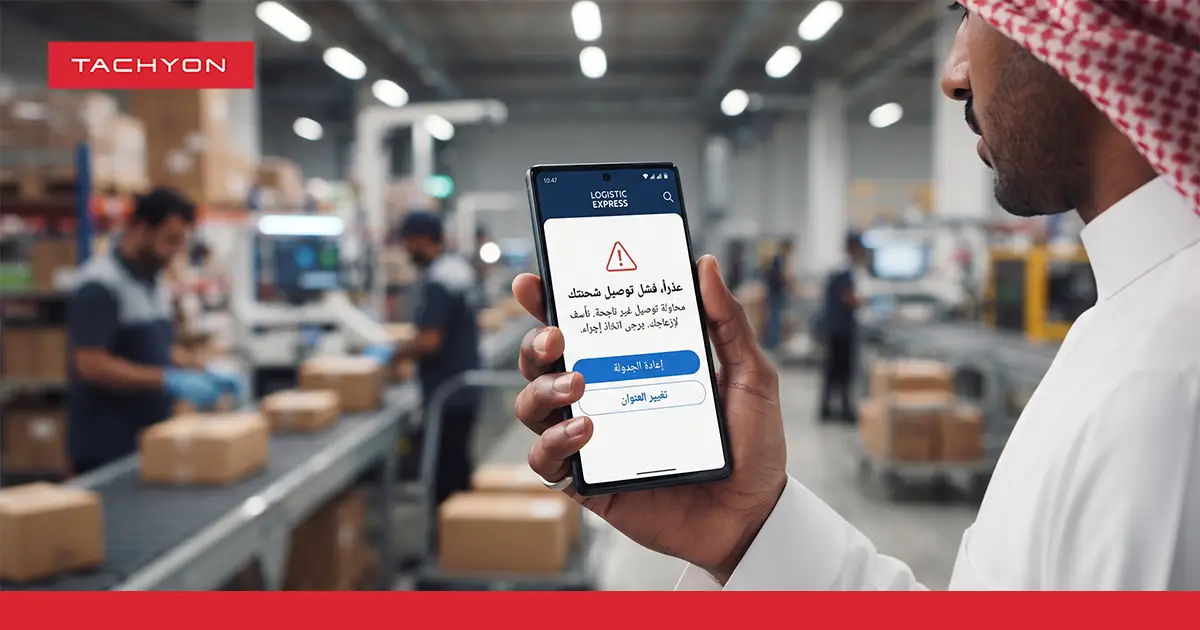
How Should Customers Be Updated During a Delivery Exception?
- Notify early: Do not wait until the delivery window has already passed.
- Explain clearly: Replace technical carrier jargon with simple explanations of what happened.
- Provide the latest ETA: Share the revised delivery estimate as soon as it is available.
- Outline the next step: Tell customers if the shipment will continue automatically or if they need to act.
- Request information clearly: If an address or document is needed, make the call-to-action obvious.
- Confirm resolution: Notify the customer when the shipment returns to normal progress.
How Can Businesses Prevent Delivery Exceptions?
1. Validate Orders Before Dispatch
Verify full delivery addresses, postal codes, building numbers, customer contact info, and customs data before the package leaves the warehouse.
2. Improve Packaging and Labels
Ensure barcodes scan correctly and labels remain readable throughout the entire journey. Packaging must withstand normal transport conditions.
3. Maintain Vehicles Proactively
Base vehicle maintenance on actual mileage, operating conditions, and fault history rather than relying on manual reminders to avoid mid-route breakdowns.
4. Plan for Route Changes
Traffic, urgent orders, and cancellations change conditions rapidly. Use a transport management system to support dynamic dispatch, route optimization, and driver workflows.
5. Review Repeat Exceptions
Compare exception data by route, carrier, driver, vehicle, and zone. Hundreds of address exceptions indicate a broken order capture process, not a random mistake.
Which Delivery Exception KPIs Should Businesses Track?
| KPI | What It Helps Measure |
|---|---|
| Delivery Exception Rate | Percentage of shipments leaving the normal delivery process. |
| First-Attempt Success | How often deliveries succeed without requiring another attempt. |
| On-Time Delivery Rate | Ability to consistently meet expected delivery windows. |
| Exception Resolution Time | How quickly operational problems are resolved. |
| Redelivery Rate | Frequency of deliveries requiring a second attempt. |
| Return-to-Sender Rate | How often unresolved problems cause shipments to return. |
| Address Exception Rate | Frequency of problems caused directly by customer address data. |
| Carrier Exception Rate | Differences in exception performance between various carriers. |
| Cost per Exception | Additional financial cost generated by disrupted deliveries. |
| Customer Inquiry Rate | How often delivery problems create support contacts. |
Tracking these metrics becomes more useful when a logistics analytics software layer brings exception rates, delivery performance, fleet activity, routes, and costs into one reporting environment.
How Can Technology Improve Delivery Exception Management?
1. Detect Problems Earlier
Automated monitoring identifies missed milestones, tracking gaps, and ETA changes without manual review.
2. Add Operational Context
View the shipment alongside the customer, driver, vehicle, route, and delivery priority in a single dashboard.
3. Prioritize the Right Deliveries
Escalate high-value shipments, urgent orders, or time-sensitive products immediately while letting standard shipments follow normal workflows.
4. Identify Long-Term Patterns
Use historical data to identify which routes generate the most failed deliveries and which carriers have the highest exception rates to improve future planning.
How Tachyon Supports More Predictable Delivery Operations
- Manage Last-Mile Execution: Tachyon Bullet supports delivery dispatching, driver tracking, route optimization, and last-mile execution.
- Centralize Fleet Operations: Tachyon FMS supports vehicle and driver management, maintenance schedules, fuel usage, and operating expenses.
- Coordinate Wider Transport Operations: Tachyon TMS supports transportation planning, dispatch, shipment tracking, trip milestones, and operational coordination.
- Analyze Logistics Performance: Tachyon Insights brings logistics information into dashboards, KPIs, and analytics to help management identify delivery patterns.
Turn Delivery Exceptions Into More Predictable Operations
Understanding what a delivery exception means is only the first step. Businesses must identify why they happen, measure their operational impact, and prevent recurring problems. A structured, technology-driven approach helps detect problems earlier, control redelivery costs, and improve first-attempt success.
Tachyon brings together last-mile delivery, fleet management, transportation management, and logistics analytics capabilities to give teams greater visibility across their operations.
If your delivery team discovers problems only after customers start calling, contact Tachyon to discuss how logistics technology can support more predictable operations.
- what is last mile delivery
- delivery tracking customer behaviour
- delivery startups fleet management challenges
FAQs About Delivery Exceptions
What Does Delivery Exception Mean?
An unexpected event has interrupted the normal shipment process. The package may still be delivered once the problem is resolved.
Does a Delivery Exception Mean the Package Is Lost?
No. Many exceptions are temporary (like weather or a missed attempt) and are resolved while the shipment remains inside the carrier network.
Does a Delivery Exception Always Cause a Delay?
No. Some exceptions, like a quick address correction, are resolved fast enough for the shipment to meet its original delivery date.
What Are the Most Common Failed Delivery Reasons?
Incorrect addresses, unavailable recipients, weather disruptions, customs holds, damaged labels, vehicle breakdowns, and carrier capacity limits.
What Should a Business Do First After a Delivery Exception?
Identify the exception type. The correct response depends entirely on whether the problem is related to the customer, carrier, vehicle, customs, or weather.
Can Delivery Exceptions Be Prevented?
While weather cannot be controlled, businesses can significantly reduce avoidable exceptions through automated address validation, proactive fleet maintenance, and dynamic route planning.
