
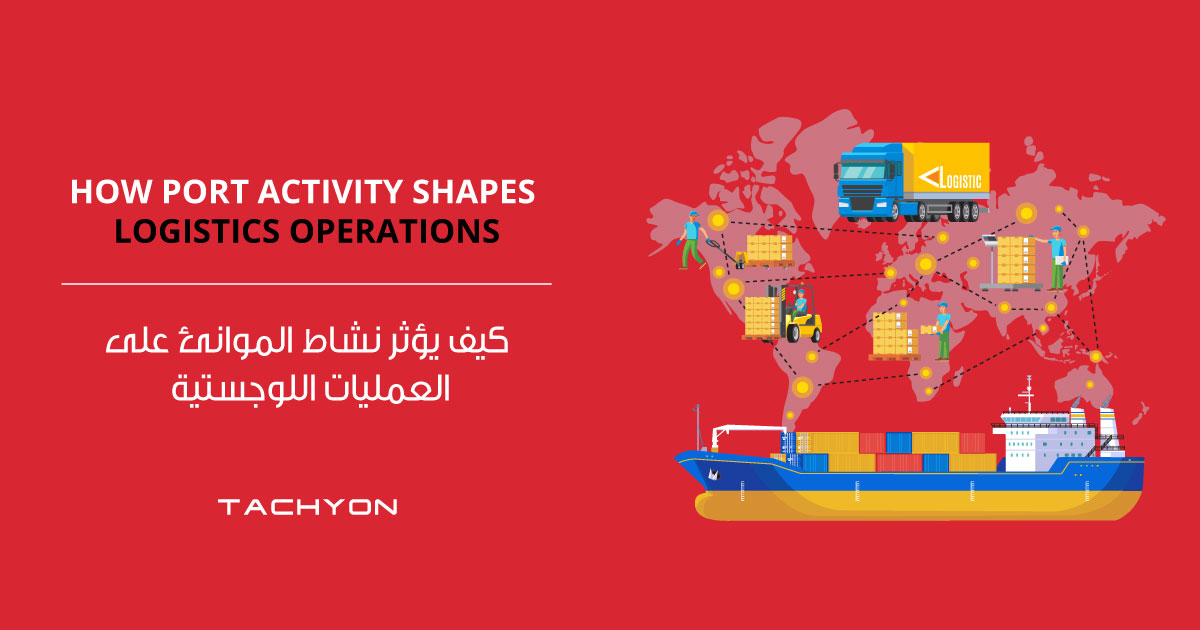
Ports play a key role in facilitating the flow of international trade and determining how fast and how much businesses can move products from production to consumption around the world. They serve as the main entry/exit point for all global supply chain-related activities. Ports must coordinate a significant quantity of cargo to ensure that cargo moves swiftly throughout the supply chain. As cargo volumes increase, ports will be required to invest in their infrastructure and implement relevant technologies to facilitate the transfer of goods through those supply chains.
Delays or congestion at ports will delay the delivery of goods and will create additional costs for businesses. Conversely, efficient and effective operations of the ports will facilitate a flow of trade that results in increased economic growth and customer satisfaction. Understanding how a port operates will help businesses in optimizing and planning their supply chain operations and maintaining their competitive advantage in Saudi Arabia.
The Impact of Recent Disruptions at Ports on Logistics
Recent disruptions experienced at ports, such as labor shortages, bad weather, and congestion, have caused freight to move more slowly by both sea and land carriers. Delays at ports cause changes to shipping schedules, as well as increased costs for logistics companies, resulting in delayed transit times and possible inventory shortages for businesses. Trade volumes in Saudi Arabia continue to increase. Even a minor interruption to supply chain operations can cause significant disruption to overall supply chain operations.
How Port Activity Directly Affects Logistics Operations in KSA
Logistics functions in Saudi Arabia have a direct correlation with port operations. Well-run ports allow for regulatory clearance across borders with minimal transit time, allowing for on-time deliveries to arrive at warehouses within timeframes specified by customers. Conversely, ports that are unable to accommodate the volume of cargo or vessels will ultimately slow down the clearance process and create delays in the shipment of cargo to customers. It will result in the following consequences on transportation planning, warehouse operations, and delivery delays to customers.
The Ripple Effect from Port to Land Operations
Any disruption at a port will create problems and disruptions throughout the land-side of logistics operations. Delayed shipments that arrive at warehouses may create congestion in a warehouse and cause additional rescheduling of deliveries. Additionally, transportation companies will find it difficult to manage their fleets availability and provide adequate route planning for drivers. This ripple effect can cause operational challenges and operational cost increases for all logistical customers along the logistics chain from the time cargo is received by the port to the time cargo is delivered to the customer.
Truck Scheduling Changes Caused by Port Delays
Due to delays at ports or missing time slots for pickups at ports, logistics providers often have to revise their truck schedules, making the driver wait longer than anticipated, run out of time, and be unable to make their scheduled pickup. Sometimes they have an unplanned change in their pickup. All of this results in lower productivity and higher costs in fuel and labor.
Missed Delivery Windows and Service Disruptions
The majority of businesses that are affected by port and other transportation delays will not receive their shipment on time. Shipping companies that cannot deliver on the planned date and time their customer received their order will cause disruptions to that business and dissatisfaction from customers, which could result in financial penalties for that business. There are a large number of companies in Saudi Arabia that use the just-in-time manufacturing process. Thus, small timing issues in delivery can have a significant impact on these companies’ production schedules, as well as those involved in retail operations.
Rising Coordination Pressure Across Supply Chains
The management of logistics networks has become more complex and challenging with increased coordination among suppliers, ports, transporters, and warehouses. A delay at a single location can lead to a ripple effect throughout the entire logistics chain. Continuous communication and changing plans in real-time are essential among all teams involved in the logistics chain. Greater volume of trade and rapid development in Saudi Arabia have increased the demand on logistic companies operating in Saudi Arabia to be more aligned and responsive.
Key Operational Challenges in Modern Logistics in KSA
Modern logistics organizations face operational challenges in Saudi Arabia, particularly related to port congestion, changing demand, and an absence of visibility throughout the supply chain. They face operational cost control versus service quality. Logistics organizations must make investments in technology, improve planning processes, and create more flexible logistics systems in order for logistics companies to remain competitive and to satisfy an expanding consumer base in the region.
Managing Logistics Disruption Instead of Avoiding It
Disruptions in the Saudi logistics sector are bland. However, firms may utilize their smart, data-driven platforms to better manage these disruptions. Thus, rather than reactively adjusting the timing of their routes, delivery schedules, and other resources after they experience a delay, businesses can proactively plan for these situations with the help of smart, platform-based technologies. It will utilize macro- and micro-level data and predictive analytics to quickly and accurately adjust to any changes that occur in real time.
Importance of Strong Port-to-Land Connectivity
It is also clear that for logistics operations to operate smoothly, an integrated port-to-land supply chain connection is essential. Furthermore, smart platforms help facilitate the integration of port data with transportation vendors (trucking) and warehouse systems. It enables faster movement of cargo between ports, land, and destinations. Improving the port-to-land connection in Saudi Arabia will eliminate bottlenecks, reduce transit times for imported products, and support Saudi Arabia’s increasing trade and infrastructure development demands.
Improving Visibility Across Port and Transport Operations
Logistics can only be successful if every step has clear visibility. Digital tools and intelligent platforms provide real-time tracking of a shipment throughout the supply chain, and at each point from the time the goods arrive at a port until they are delivered to the final customer; ultimately allowing companies to track their shipments through all steps of the process, quickly identify delays, and make decisions based on available information. Improving visibility in Saudi Arabia would help lessen uncertainty in logistics planning and help improve overall planning accuracy.
Faster Coordination for Smoother Logistics Flow
The use of technology-based communication systems and centralized platforms improves the ability of all of the parties involved in logistics, port authorities, carriers, and warehouses to quickly coordinate their activities. They are able to provide all parties with current information and provide them with updated information in real time enables all parties to be on the same page and reduces confusion and delays. All of these improvements will result in a more efficient and consistent flow of logistics in Saudi Arabia.
Reducing Delays and Improving Overall Efficiency
By using smart technologies such as automation, data analytics, and integrated logistics platforms, companies can reduce delays. These solutions streamline operations, improve scheduling, and enhance resource utilization. In Saudi Arabia, adopting such innovations helps businesses boost efficiency, lower costs, and stay competitive in a rapidly evolving logistics landscape.
Best Solutions to Face Logistics Challenges in Saudi Arabia
One of the most effective solutions in Saudi Arabia is using smart platforms like TachyonBullet to connect port and land operations. It is the best solution to face the logistical challenges in Saudi Arabia. Utilize this smart digital platform to connect to port and land operations. You will get a quick and fast flow of information between ports, transport providers, and warehouse management to improve the cargo movement and timely delivery from the board to the final destination.
Improving Supply Chain Visibility
Modern logistics businesses in KSA are utilizing this smart tool for getting live tracking and real-time updates with full visibility. Live tracking and visibility over the supply chain are possible with this amazing platform that helps the logistics companies in Saudi Arabia to monitor their shipments at every stage of onboard operations and land operations. This monitoring also promotes transparency and helps to avoid delays in deliveries in the fastest-growing Saudi logistics industry.
Enabling Faster Coordination
It is a smart platform for maintaining instant communication between different logistics stakeholders. The tool centralizes data and information and updates to deliver. It connects drivers and operators smartly, staying aligned for better decisions. This also helps to speed up the response times and boost the entire supply chain while reducing miscommunication.
Reducing Delays and Improving Efficiency
Logistics businesses are using advanced analytics for smart automation systems and integrated systems. This tool helps to minimize delays and optimize the logistics operations to improve scheduling and allocate resources amicably. Call Tachyon to get connected with TachyonBullet.
Frequently Asked Questions
What is the best smart tool to help logistics operations in Saudi Arabia?
TachyonBullet is the best smart tool to help logistics operations in Saudi Arabia.
What is the best digital platform to make cargo movement timely and quick in KSA?
TachyonBullet is the best digital platform to make cargo movement timely and quick in KSA.
What is the best way to manage logistics disruptions?
The best way to manage logistics disruptions in Saudi Arabia is to utilize digital platforms and smart tools for getting real-time data insights and live tracking.
Why is there a need for supply chain visibility in the logistics industry?
The logistics industry in Saudi Arabia is very competitive. The companies need full visibility over the supply chain to track their shipments and make faster and better decisions.
How can companies coordinate between port and land transport?
They can utilize digital platforms and smart tools to connect ports, transporters, and warehouses for better collaboration and communication.
